
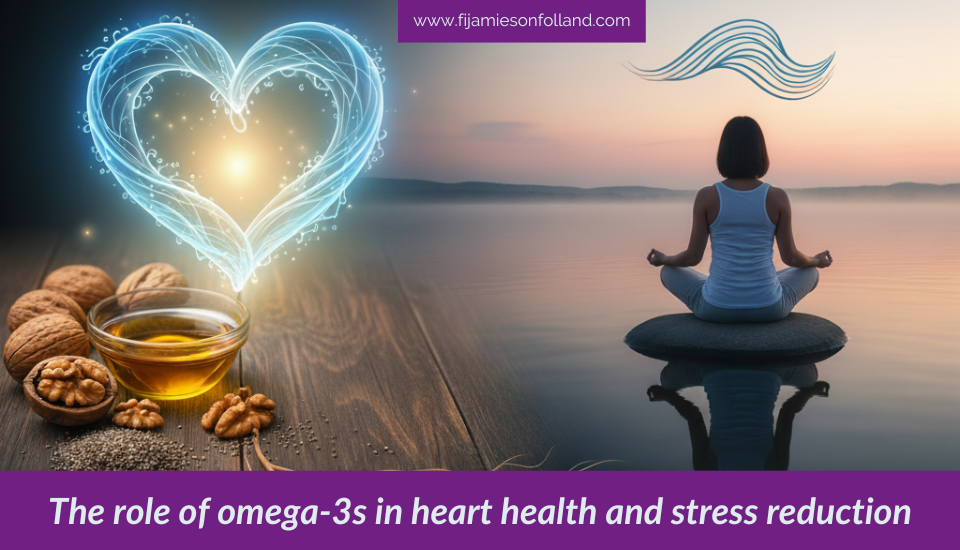
When people talk about nutrition for the heart, we often get bombarded with the same old advice—cut down on salt, avoid saturated fats, eat more vegetables—and while all of those things are important, one of the most fascinating, and seemingly one of the most overlooked, nutrients in the heart health conversation is omega-3 fatty acids.
They aren’t trendy anymore, they aren’t shiny or new; however they are foundational, and what’s more, they hold a secret superpower – not only do they strengthen and protect your heart physically, they also help reduce stress, calm anxiety, and create that sense of inner resilience we’re all searching for in this what-can-feel-like-relentlessly busy world.
Now, let’s just pause here for a second, because if you’re like me when I first began my journey into nutrition, you may hear ‘omega-3s’ and immediately think of fish oil capsules lined up on a pharmacy shelf. However omega-3s are not just supplements—they are molecular messengers, anti-inflammatory warriors, and, believe it or not, peacekeepers between your mind and your cardiovascular system. They’re one of the reasons why the traditional diets of places like Japan or the Mediterranean, rich in seeds, good quality oils and oily fish, show such dramatically lower rates of both heart disease and depression compared to Western fast-food patterns.
So let’s focus in on the role of omega-3s in heart health and stress reduction. We’ll break down what they actually do inside your body, where to find them, how much you need, what the latest science is showing us, and how you can weave them into your life in ways that feel doable, delicious, and yes—even joyful.
What omega-3s actually are and why they matter
Omega-3 fatty acids are what we call ‘essential fats,’ meaning your body isn’t able to make them on its own—you have to get them from food. There are three main types you’ll hear about –
- ALA (alpha-linolenic acid) – found mostly in plant sources like flaxseeds, chia seeds, walnuts, and hemp.
- EPA (eicosapentaenoic acid) – mostly found in fatty fish such as salmon, sardines, and mackerel.
- DHA (docosahexaenoic acid) – also in fatty fish, and especially important for brain and eye health.
Now, here’s the kicker – while ALA from plants is valuable, your body isn’t very efficient at converting it into EPA and DHA—the forms most directly linked to heart protection and mental calm. That means while flax on your morning soaked chia seeds is great, it’s usually not enough by itself. That’s why nutritionists and heart health experts place such emphasis on marine sources or high-quality supplements.
Omega-3s as anti-inflammatory mediators
When we talk about heart disease, one of the biggest culprits is inflammation. Think of it like this – your blood vessels are lined with delicate tissue, and when you eat poorly, smoke, carry excess weight, or endure constant stress, those vessels get irritated. Microscopic damage occurs, and the body tries to patch it with cholesterol, which is how plaques form. Over time, those plaques can rupture, leading to heart attacks or strokes.
Omega-3s are like fire extinguishers for that inflammation. They produce compounds called resolvins and protectins, which don’t just reduce inflammation—they actually help the body resolve it, turning off the damaging cycle and allowing healing to happen. That means smoother blood flow, healthier arteries, and a lower chance of clots forming.
Balancing stress hormones through omega-3s
Here’s where it gets exciting beyond the physical heart.
Chronic stress keeps your body locked in fight-or-flight mode—cortisol up, adrenaline up, blood pressure up—and over time, that rhythm exhausts your cardiovascular system. Omega-3s actually influence the way your brain and nervous system respond to stress.
Studies have shown that people with higher omega-3 levels have lower cortisol spikes in response to stressors, meaning they stay calmer under pressure. Omega-3s also help regulate neurotransmitters like serotonin and dopamine, the very chemicals that keep mood stable and prevent anxiety spirals.
So we can think of omega-3s being like the oil for the hinges of a creaky door. This isn’t just for our arteries—our whole stress response system becomes more fluid, less reactive, more resilient.
The mind-heart connection omega-3s enhance
Have you ever noticed that when you’re stressed, your heart pounds faster, your chest tightens, and sometimes you even feel palpitations? That’s not your imagination—that’s the direct mind-heart connection in action.
What omega-3s do is strengthen that bridge between the nervous system and the cardiovascular system. They improve something called heart rate variability (HRV)—the ability of your heart to adapt its rhythm moment by moment depending on what you need. A high HRV is linked with better stress resilience, lower risk of sudden cardiac death, and greater overall well-being. People with low HRV, on the other hand, tend to struggle more with anxiety, depression, and heart events. And yes—you guessed it—omega-3s boost HRV.
Food sources versus supplements
Now let’s get practical. Is it best to get your omega-3s from food or from a bottle?
Always both.
Food sources include –
- Salmon, sardines, anchovies, herring, and mackerel (wild-caught ideally).
- Plant options like flaxseeds, chia seeds, hemp seeds, and walnuts.
- Seaweed and algae—especially great for those of us who are vegetarians and vegans.
Supplements –
Whilst fish oil capsules, krill oil, and algae oil are common, it’s *VITAL* to make your choice of which one to pick based on both safety and quality.
Low-quality fish oils can oxidise (basically go rancid), which does more harm than good. Always look for brands tested for purity, heavy metals, and potency.
In fact, if you’re like me and you realise that we have this one body for life (so it makes sense to fuel it with the best), then you’ll also insist that the capsules you take have been encapsulated without oxygen present (so it’s their rate of oxidising is greatly reduced), plus are *GUARANTEED* to be free of mercury (sadly most of those I’ve seen that are available are not).
You also probably see the value in caring for the planet, hence you select options that are environmentally sustainable.
This leaves only 1 option that I know of. If you’re interested to find out what that is, just reply to this email or comment on the post you found this on.
How much do you actually need?
As with many things, you’ll find that recommendations vary. The American Heart Association suggests eating at least two servings of fatty fish per week (ideally with fish that are likely to contain less mercury). Supplemental doses to select are around 1,200 mg of combined EPA and DHA daily per capsule.
However it’s worth knowing that high levels of supplementation can over-thin the blood, especially if you’re on medications like anticoagulants. So it’s wise to check in with your primary healthcare practitioner who knows your health history.
The emotional comfort of omega-3s
Something that often gets overlooked is how omega-3s can help with not just anxiety, they can also help with depression. In fact, several studies have shown that omega-3 supplementation—particularly EPA—can reduce symptoms of major depressive disorder, in combo with conventional treatment.
Omega-3s in special life stages
Another layer worth talking about is how different stages of life may increase our need for omega-3s –
- Pregnancy and postpartum – DHA is crucial for foetal brain development, and mothers with adequate intake often report fewer mood swings postpartum
- Aging – As we get older, omega-3s help maintain cognitive function and protect against dementia while also keeping arteries flexible
- Chronic illness – Those with diabetes, high blood pressure, or autoimmune conditions often benefit from the anti-inflammatory effects of higher omega-3 intake
This isn’t just about ‘taking a bit of fish oil.’ It’s about recognising that omega-3s are building blocks our bodies require more of at certain times.
Beyond fish – innovative ways to consume omega-3s
Sometimes people tell me, ‘I really don’t like fish,’ and they assume they’re doomed to deficiency, however this isn’t true.
Options include –
- Mercury-free, non-oxidised, environmentally sustainable, fish oil capsules that contain lemon oil (let me know if you want more info)
- Algae oil capsules (vegan, rich in DHA)
- Ground flaxseed stirred into soups or smoothies
- Chia pudding with fruit and nuts
- Pre-soaked hemp hearts sprinkled over salads
- Walnut pesto instead of the classic basil version
The goal is consistency. It doesn’t have to be the same fish fillets every week, change it up!
Omega-3s and the Mediterranean lifestyle
One reason omega-3s keep showing up in research is the Mediterranean diet. People in coastal regions naturally eat more fish, vegetables, olives, and nuts, and what’s fascinating is that their lower rates of heart disease aren’t explained by one nutrient alone—it’s the whole pattern. However omega-3s are a cornerstone of that pattern, helping reduce both physical inflammation and emotional burnout.
Pairing omega-3s with other lifestyle choices—like walking in the mornings and after meals, sharing food socially, catching up with a friend for a green tea—creates a synergy that’s invaluable.
Omega-6 to omega-3 balance
Here’s a nuance that often gets overlooked – it’s not just about how many omega-3s you eat, it’s about your ratio of omega-6 to omega-3.
Omega-6 fatty acids (found in processed seed oils like soybean, corn, and sunflower oil) aren’t evil, however when consumed in excess—as they are in many Western diets—they crowd out omega-3s and shift the body toward inflammation.
In traditional diets, the omega-6 to omega-3 ratio was close to 2 -1. In modern diets, it’s often 15 -1 or worse and that imbalance fuels heart disease and stress reactivity.
Hence reducing processed oils while increasing omega-3 intake creates harmony in the body.
Omega-3s and sleep quality
This one surprised me when I first read the studies. Omega-3s—especially DHA—are linked to better sleep quality. Poor sleep increases heart risk and raises cortisol, so improving sleep indirectly protects the heart and reduces stress. Parents of children with low omega-3 intake even report restless sleep improving after safe, high quality supplementation.
So, in a way, those evening salmon dinners or chia puddings are like giving your nervous system a lullaby.
A day in the life of omega-3 nourishment
Let’s paint a picture of how it might look practically –
- Breakfast – soaked chia seeds, walnuts, and blueberries
- Lunch – sardine salad with leafy greens, olive oil, and lemon
- Snack – apple slices with a couple of pre-soaked and rinsed almonds sprinkled with hemp seeds
- Dinner (maybe shared with a friend?) – grilled salmon with quinoa and roasted vegetables
- Dessert – 70%+ dark chocolate with a few pre-soaked and rinsed walnut halves
This isn’t a prescription—it’s an illustration.
Simply non-processed foods, joyful flavours, and steady omega-3 support throughout the day.
Conclusion – the quiet protectors
Omega-3s aren’t glamorous.
They’re not the latest wellness fad or some exotic super food flown in from halfway around the world.
They’re humble fats, found in seeds, nuts, and fish, that quietly rebuild, repair, and calm our bodies at the deepest levels. They strengthen our arteries, reduce inflammation, stabilise mood, soften stress responses, and give our hearts both physical protection and emotional resilience.
For me, they’re part of a bigger philosophy – healing the heart is never just about mechanics, it’s about nurturing both body and mind. And omega-3s, in their quiet way, sit right at that intersection.
So whether you’re adding soaked flax seeds to your smoothie, choosing sardines over processed meats, or taking a high-quality, mercury-free, sustainable fish oil capsule, know that you’re giving your heart more than just nutrients—you’re giving it peace.
And in a world where the potential for stress is ever-present, that peace is priceless.
See you on this week’s #AlivewithFi 🙂
Fi Jamieson-Folland D.O., I.N.H.C., is The LifeStyle Aligner. She’s an experienced practitioner since 1992 in Europe, Asia and New Zealand as a qualified Osteopath, Integrative Nutrition Health Coach, speaker, educator, writer, certified raw vegan gluten-free chef, and Health Brand Ambassador.

Facebook Instagram LinkedIn Pinterest YouTube
1 Worth a read – research showing how daily omega-3s blunt cortisol/inflammation stress response, preserving telomeres for CV aging protection https -//pmc.ncbi.nlm.nih.gov/articles/PMC8510994/