
So is it really possible for the foods we choose to be a powerful, delicious way to cool the flames of inflammation and keep our hearts beating strong – lifelong?
Because while life’s ‘hustle’ is exhilarating, it can also spark inflammation, that sneaky process that quietly damages our hearts and fuels heart disease.
As a healthy heart coach who’s all about empowering you to live your fullest life, it’s time to cover how anti-inflammatory foods can be your heart’s best friend, helping you reduce inflammation, protect your cardiovascular system, and feel super-charged in the process.
We’ll dive deep into why inflammation is a heart health villain, how it affects women uniquely, and a fresh look at anti-inflammatory food strategies—science-backed and tailored to your busy, beautiful life.
Why inflammation threatens your heart
Inflammation isn’t just a buzzword—it’s a silent force that can wreak havoc on your heart if left unchecked, and for those of us who are women, we need to pay extra attention because our biology makes us uniquely vulnerable. Inflammation is your body’s completely natural (and necessary) response to injury or infection, like a superhero rushing to protect you, however when it becomes chronic—triggered by stress, a low-nutrient diet, or other factors—it turns into a villain that damages your blood vessels, promotes plaque build up, and increases your risk of heart disease, heart attacks, and strokes. A 2021 study in Nature Reviews Cardiology found that chronic inflammation, marked by high levels of C-reactive protein (CRP), raises the risk of coronary heart disease by 25% in women, and that’s a statistic it’s unwise to ignore.
Women face unique challenges here – our hormonal fluctuations (during menstrual cycles, pregnancy, or menopause) can amplify inflammation, especially as oestrogen levels drop post-menopause, leaving our arteries more susceptible to damage. We also deal with emotional and physical stressors—like care giving or societal pressures—that fuel inflammation, as a 2022 Journal of the American Heart Association study noted, showing that women under chronic stress have a 30% higher risk of cardiovascular events compared to men.
The good news?
Anti-inflammatory foods can help douse this fire, protecting your heart and boosting your overall vitality. Let’s dive into how these foods work their magic and how you can make them a delicious part of your life.
How inflammation harms your heart
Before we get to the tasty stuff, let’s unpack how chronic inflammation attacks your heart, because understanding the ‘why’ empowers you to make smart choices.
Here’s what’s happening in your body when inflammation runs wild –
• Arterial damage – Chronic inflammation irritates the lining of your blood vessels, making them more likely to collect oxidised cholesterol and form plaques, a process called atherosclerosis that can lead to heart attacks or strokes. A 2020 Circulation study found that women with high CRP levels had a 20% higher risk of this condition.
• Blood pressure elevation – Inflammation stiffens blood vessels, increasing blood pressure and forcing your heart to work harder. Women post-menopause are especially vulnerable, as declining oestrogen reduces vascular flexibility, per a 2023 Hypertension journal report.
• Insulin resistance – Inflammation disrupts insulin signalling, leading to blood sugar imbalances that stress your heart. A 2021 Diabetes Care study showed that women with chronic inflammation had a 15% higher risk of insulin resistance, a heart disease risk factor.
• Oxidative stress – Inflammation generates free radicals that damage cells and blood vessels, accelerating heart disease. Women’s smaller blood vessels are more susceptible, per a 2022 European Heart Journal study.
• Clotting risks – Inflammation makes blood stickier, increasing the chance of clots that can block arteries. Women are more prone to stress-related clotting changes, per a 2023 Thrombosis Research study.
These effects can affect women more than men because of our unique risk factors—like autoimmune diseases, pregnancy complications, or increased emotional stress—which makes reducing inflammation with food a powerful tool for heart health 1
Fresh anti-inflammatory foods for your heart
It’s time to fill your plate with anti-inflammatory foods that protect your heart and taste oh-so-good, all while fitting around your busy life. Let’s dig in.
Load up on colourful cruciferous veggies
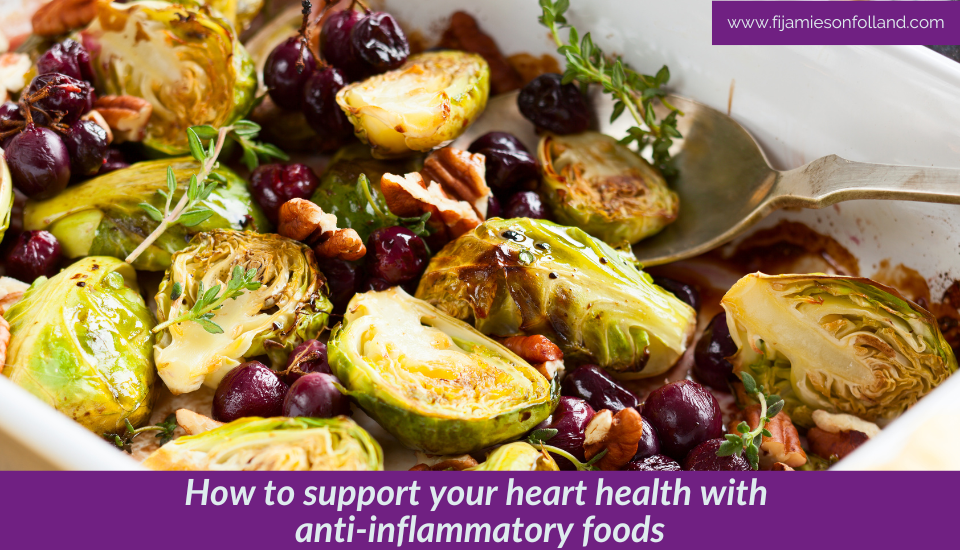
Cruciferous vegetables like cauliflower, Brussels sprouts, broccoli and kale are packed with sulforaphane, a compound that reduces inflammation and protects blood vessels. A 2022 Journal of Nutritional Biochemistry study found that women eating cruciferous veggies daily had 15% lower CRP levels and improved arterial health.
Trial – Roast Brussels sprouts with olive oil, blend cauliflower into a creamy soup, or massage kale into a salad. Aim for 1–2 cups daily to cool inflammation and boost heart health.
Savour tart cherries for antioxidant power
Tart cherries (fresh, frozen, or as juice) are rich in anthocyanins, antioxidants that fight inflammation and support heart function. A 2023 Nutrients study showed that women consuming tart cherries daily had 12% lower inflammation markers and better blood pressure control.
Trial – Add frozen tart cherries to smoothies, snack on dried ones (unsweetened), or sip a small glass of tart cherry juice post-walk. Include a serving 3–4 times a week for heart-protective benefits.
Sprout those grains
Sprouted grains like sprouted spelt, or rye are easier to digest and packed with anti-inflammatory nutrients like fibre and antioxidants, which stabilise blood sugar and reduce heart strain. A 2021 American Journal of Clinical Nutrition study found that women eating sprouted grains had 10% lower inflammation and improved cholesterol levels.
Trial – sprouted grain bread for toast, or spelt in a grain bowl. Aim for 1–2 servings daily.
Enjoy fatty fish alternatives
If you’re not a fan of typical fatty fish, try less common options like anchovies, herring, or trout, which are rich in omega-3s that reduce inflammation and protect arteries. A 2022 European Journal of Nutrition study showed that women consuming omega-3-rich fish twice weekly had 14% lower inflammation and reduced heart disease risk.
Trial – Add anchovies to a salad, grill herring for dinner, or bake trout with herbs. Aim for 2 servings a week.
Add anti-inflammatory herbs
Fresh herbs like parsley, coriander/cilantro, and dill are loaded with antioxidants that combat inflammation and support heart health. A 2023 Journal of Herbal Medicine study found that women using fresh herbs daily had 10% lower CRP levels.
Trial – Chop parsley into salads, or add dill to roasted veggies. Use a handful of fresh herbs in at least one meal daily for a flavourful, heart-healthy boost.
Snack on citrus zest
The zest of citrus fruits like lemons, oranges, and grapefruits is packed with flavonoids that reduce inflammation and protect blood vessels. A 2022 Phytotherapy Research study showed that citrus flavonoids lowered inflammation markers by 11% in women.
Trial – Grate lemon zest over live coconut yogurt, sprinkle orange zest on soaked chia seeds, or add grapefruit zest to smoothies. Use zest from one citrus fruit daily for a zesty, heart-protective kick.
Tuck into anti-inflammatory legumes
Legumes like red lentils, mung beans, black, fava or adzuki beans are rich in fibre, antioxidants, and protein, which reduce inflammation and stabilise blood sugar. A 2021 Nutrients study found that women eating legumes regularly had 13% lower inflammation and better heart health.
Trial – Make a red lentil curry, toss mung beans into a salad, or cook fava beans for a side dish. Include a serving 3–4 times a week.
Create a heart-healthy flavour ritual
Make eating anti-inflammatory foods a joyful ritual by experimenting with flavour pairings that excite your taste buds, like combining tart cherries with dark chocolate or parsley with lemon zest. This boosts adherence and reduces stress, which further lowers inflammation. A 2022 Appetite study showed that women who enjoyed flavourful meals had 12% lower stress hormones and better heart outcomes. Spend a few minutes each week planning a new flavour combo to keep your meals exciting.
Your heart-healthy eating plan
Ready to make these foods part of your life?
If yes, here’s a week-long plan to weave anti-inflammatory eating into your routine, keeping your heart strong and inflammation low –
• Day 1 – Add 1–2 cups of cruciferous veggies—roast Brussels sprouts or make a kale salad.
• Day 2 – Include tart cherries—blend them into a smoothie or sip a small glass of tart cherry juice.
• Day 3 – Trial sprouted grains—use sprouted rye bread for breakfast or spelt in a grain bowl.
• Day 4 – Enjoy a serving of anchovies or trout in a salad or as a main dish.
• Day 5 – Add fresh herbs like parsley or dill to your lunch and dinner.
• Day 6 – Sprinkle citrus zest on a meal or snack, like lemon zest on live coconut yogurt.
• Day 7 – Include a serving of red lentils or mung beans in a soup or salad.
Cycle through these practices, tweaking them to suit your taste and schedule. Check in with your primary healthcare practitioner if you have heart disease risk factors or dietary restrictions to ensure safety.
You’re the chef of your heart’s future
Chronic inflammation might be a threat to your heart, however with anti-inflammatory foods, you’re holding the power to respond and protect your heart with every delicious bite.
For those of us who are women, we face unique challenges—hormonal shifts, emotional stressors, and a higher risk of subtle heart issues—however we also have incredible strength to nourish our bodies with intention and love.
By embracing cruciferous veggies, tart cherries, sprouted grains, fatty fish alternatives, fresh herbs, citrus zest, anti-inflammatory legumes, and flavourful rituals, rather than simply eating—you’re building a heart-strong life that’s vibrant, joyful, and full of possibility.
Your heart is the foundation of everything you love, so feed it with the care it deserves.
See you on this week’s #AlivewithFi 🙂
1 Interesting links between consuming anti inflammatory foods and our heart health
https -//www.ahajournals.org/doi/10.1161/CIRCRESAHA.118.313348
Fi Jamieson-Folland D.O., I.N.H.C., is The LifeStyle Aligner. She’s an experienced practitioner since 1992 in Europe, Asia and New Zealand as a qualified Osteopath, Integrative Nutrition Health Coach, speaker, educator, writer, certified raw vegan gluten-free chef, and Health Brand Ambassador.