
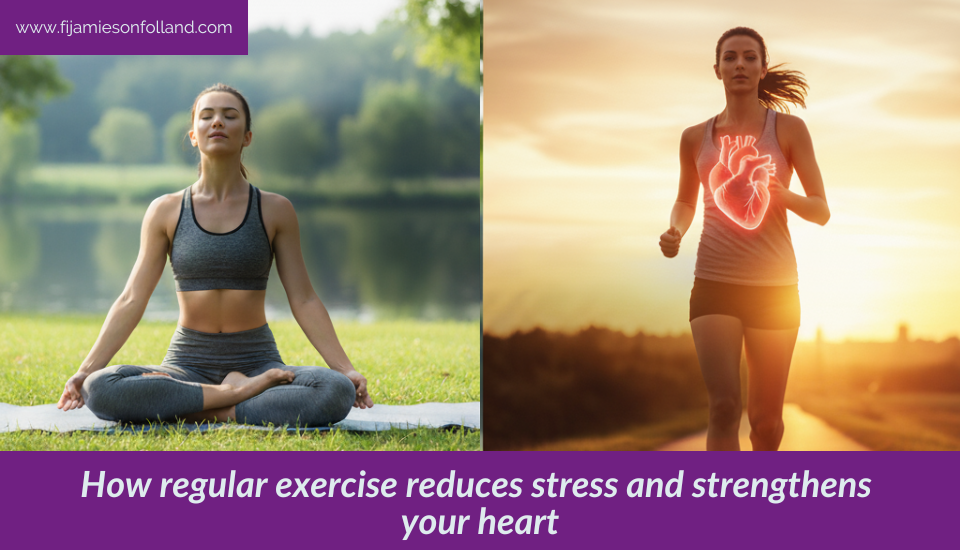
There’s something almost poetic about the way our bodies respond to movement, especially when it comes to the heart — that muscle beating tirelessly in quiet rhythm, keeping us alive without ever asking for thanks. When you move regularly, when you let your body stretch and strengthen and breathe, your heart listens.
It adapts.
It grows more efficient, more resilient, and, perhaps most importantly, calmer. In a world that rarely slows down, regular exercise becomes more than just a lifestyle habit — it’s an anchor for your emotional stability and a shield for your cardiovascular health.
Let’s take a deep, honest look at how this beautiful connection works. Because understanding the relationship between exercise, stress, and your heart isn’t just about knowing the facts — it’s about learning how to live with more balance, energy, and peace inside your own skin.
Why your heart feels what you feel
Your heart doesn’t just pump blood, it reacts to your emotions.
When you’re stressed, anxious, or overwhelmed, your body produces hormones like cortisol and adrenaline, which prepare you for what’s called the ‘fight or flight’ response. This ancient, hard-wired survival mechanism raises your heart rate and blood pressure, sending a surge of energy through your muscles so you can run, defend, or escape.
However modern life doesn’t always give you a chance to release that energy. Instead, you sit at your desk, scroll through emails, and bottle up the stress. Your heart, meanwhile, stays in high alert, responding to that unspent energy with faster beats and tighter arteries. Over time, this constant tension can lead to inflammation, high blood pressure, and increased risk of heart disease.
Now here’s where exercise enters the story as the great equalizer — the release valve that lets your body return to balance. When you move, you complete that ancient stress cycle. You let your body do what it was designed to do — use the energy, release the tension, and restore calm.
Movement as your natural stress medicine
Think of exercise as nature’s built-in stress therapy. When you move your body, your brain releases endorphins — those natural mood-lifting chemicals that create the famous ‘runner’s high.’
However there’s more going on beneath the surface. Regular physical activity also increases levels of serotonin, dopamine, and norepinephrine, all of which play key roles in regulating mood and reducing anxiety.
This biochemical cocktail does something powerful for your heart. It helps lower resting heart rate and blood pressure while improving your heart rate variability — the small, healthy fluctuations between beats that signal a resilient cardiovascular system. A heart that can adapt easily between effort and rest is a heart that’s thriving.
What’s even more handy is that this doesn’t require running marathons or spending hours at the gym. It’s about consistency — the steady rhythm of movement that becomes a part of your life, not a punishment or obligation. Walking briskly for 30 minutes most days, dancing in your living room, cycling along a familiar path — it all counts. Your body doesn’t care how fancy it looks; it cares that you show up.
How exercise calms your nervous system
There’s a subtle, profound link between movement and the parasympathetic nervous system — the part of your body responsible for rest, repair, and recovery. When you’re under stress, your sympathetic system (the ‘fight or flight’ response) dominates. Exercise helps restore balance by training your body to switch more easily between these two states.
Imagine finishing a long walk or yoga session and feeling that wave of quiet satisfaction wash over you. That’s your parasympathetic system at work, slowing your heart rate, relaxing your muscles, and signalling safety to your brain. Over time, this repeated pattern teaches your body that it’s ok to relax. It builds a buffer against stress, so the next time life throws you a curveball, your heart doesn’t spike into panic mode as easily.
The beauty of this adaptation is that it happens gradually and naturally. You don’t have to force calmness; you practice it through movement.
The physical heart – stronger, leaner, and more efficient
When you exercise regularly, you’re not just managing stress — you’re changing the structure and function of your heart itself. The heart is a muscle, and like any muscle, it grows stronger with use. Regular aerobic exercise — walking, dancing, swimming, cycling — increases the volume of the left ventricle, the chamber that pumps oxygen-rich blood to the rest of the body.
This means your heart becomes more efficient. It can pump more blood with each beat, allowing your resting heart rate to decrease because it doesn’t have to work as hard to keep you going. Over time, this efficiency translates into lower blood pressure, improved circulation, and reduced risk of plaque build-up in the arteries.
Strength training also plays a role, although we often underestimate its cardiovascular benefits. Lifting weights improves muscle mass and metabolic health, which in turn supports blood sugar control — a key factor in preventing heart disease. The stronger your muscles, the less strain you place on your cardiovascular system during daily activities.
It’s a quiet transformation that adds up over months and years. You may not see your heart getting stronger, however you’ll feel it in your energy, endurance, and the way you recover from both workouts and life’s stresses.
The emotional ripple effect of regular movement
Something special happens when movement becomes a daily ritual rather than a chore. It starts to shift not just your body, it also shifts your perspective. Exercise gives you a sense of agency — a reminder that you can influence how you feel, one step or stretch at a time. That feeling of control can significantly reduce perceived stress levels.
Stress isn’t just about what happens to you; it’s about how you interpret and respond to what happens. When you move regularly, your brain begins to associate effort with reward, struggle with progress, and challenge with growth. You become more adaptable, emotionally and physically.
And this adaptability is exactly what protects your heart from the damaging effects of chronic stress. The better you can handle emotional turbulence, the less likely it is to trigger harmful physiological responses. Exercise, in essence, becomes emotional training — a rehearsal for resilience.
Sleep, recovery, and the heart-healing connection
One of the quieter benefits of regular exercise is its impact on sleep — and that connection is deeply tied to heart health. Poor sleep increases cortisol levels, raises blood pressure, and interferes with your body’s ability to repair itself. Exercise, particularly in the morning or afternoon, helps regulate your circadian rhythm and promotes deeper, more restorative sleep.
When your sleep improves, your heart gets the downtime it needs to recover from daily strain. Your blood pressure naturally dips at night — a healthy sign called ‘nocturnal dipping’ — and your heart rate stabilises. It’s during these hours of rest that your body performs its most essential maintenance work – healing cells, reducing inflammation, and restoring hormonal balance.
Regular movement, therefore, doesn’t just strengthen your heart while you’re active. It protects it while you rest.
Breaking the cycle of stress eating and energy crashes
When stress takes over, it’s easy to fall into the trap of reaching for quick comfort — sugary snacks, caffeine, or processed carbs. These foods provide short bursts of energy that lead to sharp crashes, leaving you feeling more tired, irritable, and anxious. Over time, this cycle affects blood sugar stability and increases fat accumulation around the abdomen, which is closely linked to cardiovascular risk.
Regular exercise effectively interrupts this cycle. It stabilises insulin sensitivity, helps regulate appetite hormones like ghrelin and leptin, and reduces cravings for those ‘quick fix’ comfort foods. Movement also enhances your body’s ability to use fat as fuel, improving your metabolic flexibility.
What’s particularly fascinating is how exercise shifts the reward system in your brain. The same pathways that crave sugar and comfort, start craving movement instead. It’s not about willpower — it’s about chemistry. Over time, your body learns that movement feels better than the temporary relief of emotional eating.
Finding your rhythm – how much exercise is enough
The science is clear – consistency beats intensity every time. You don’t have to push yourself to exhaustion to reap the cardiovascular and emotional rewards. For most adults, the sweet spot lies around 150 minutes of moderate aerobic exercise per week, or about 30 minutes most days.
However the truth is, your heart doesn’t count minutes — it responds to patterns. Walking briskly to work, climbing stairs, gardening, or even dancing while you cook — these moments all contribute to your weekly total. If you enjoy them, you’ll stick with them, and that’s what matters most.
As for variety, mixing in two or three strength-training sessions per week keeps your muscles strong and your metabolism humming. Yoga, tai chi, and Pilates can help improve flexibility, posture, and body awareness — all of which support better breathing and circulation.
The goal is balance – movement that energises you, not drains you; effort that feels sustainable, not punishing.
The role of community and connection
There’s another layer to exercise that often gets overlooked — the social side. Moving with others, whether through a walking group, a yoga class, or a local sports club, can amplify the stress-reducing effects of physical activity. Human connection is itself a powerful buffer against stress, and when combined with movement, it creates a synergy that strengthens both emotional and heart health.
Studies consistently show that people who engage in regular group exercise or have active social networks tend to live longer and have lower rates of cardiovascular disease. Shared laughter, encouragement, and accountability all translate into better adherence and stronger outcomes.
The message here is simple – don’t go it alone if you can help it. Your heart thrives not just on movement, however on belonging.
The subtle power of mindfulness in motion
You don’t have to meditate to practice mindfulness. Exercise, done with awareness, can become its own form of moving meditation. When you walk outside and truly notice the air against your skin, the rhythm of your steps, the sound of your breath — you’re grounding yourself in the present moment.
This mindfulness element is deeply restorative for the nervous system. It interrupts cycles of rumination, lowers stress hormone levels, and promotes mental clarity. For your heart, that means less pressure, both literally and figuratively.
Trial this simple shift – during your next workout, focus on how your body feels rather than how it looks or performs. Listen to your heartbeat, pay attention to your breathing, and let yourself feel gratitude for your body’s ability to move. That gratitude itself has measurable health benefits, reducing inflammation and enhancing heart rate variability.
The long game – how exercise adds years and quality to your life
One of the most inspiring findings in cardiovascular research is how profoundly regular exercise can extend not just lifespan, it can positively impact our health span — the number of years you live free of disease and limitation.
People who stay active into middle age and beyond have significantly lower risks of heart attacks, strokes, and heart failure.
And beyond the statistics lies something even more meaningful – they enjoy more vitality.
They recover faster from illness.
They experience sharper cognition, steadier mood, and greater independence in later years.
Exercise slows down the natural stiffening of arteries that comes with aging, improves mitochondrial health (the energy factories in your cells), and supports optimal cholesterol balance.
It’s like investing in a retirement plan for your heart — one that pays dividends not in dollars, instead in energy and joy.
When stress and exercise meet in harmony
It’s important to remember that not all stress is bad.
The right kind of stress — like the challenge of a good workout — actually strengthens your heart and nervous system. This is called ‘hormetic stress,’ the beneficial kind that pushes your body to adapt.
The key is balance.
If you’re already under significant emotional stress, pushing through high-intensity workouts every day may backfire by keeping cortisol levels elevated. Instead, alternate harder days with recovery-focused movement like stretching, gentle yoga, or leisurely walks.
Your body thrives on variety and rhythm.
By learning to listen to your body’s cues — when to push, when to rest — you cultivate a kind of inner wisdom that supports both heart and mind. It’s a dance of energy, recovery, and awareness.
Turning exercise into a lifelong love story
The most successful, sustainable exercise routines are built on enjoyment, not obligation. You can’t force a lifelong relationship with something you dread. Instead, think of movement as a form of self-expression — a way to celebrate what your body can do.
When you find an activity that makes you feel alive — swimming in open water, hiking through forests, practicing yoga at sunrise — you create emotional memories around movement. These experiences become anchors you return to, not chores to check off a list.
Over time, this love for movement spills into every corner of your life.
You handle stress differently.
You breathe more deeply.
You approach challenges with steadier hands and a calmer heart.
That’s the magic of it all.
Exercise starts as something you do, however eventually, it becomes something you are — a reflection of your inner strength and care for yourself.
Closing thoughts – your heart as your lifelong partner
Your heart has been with you since your very first moment — beating, adjusting, responding, protecting. Every time you choose to move, you’re saying thank you. You’re offering it the rhythm and balance it craves. Regular exercise isn’t about perfection or punishment. It’s about partnership — a dialogue between your body and your spirit that grows stronger with time.
The science is undeniable; and the feeling is even more powerful. Move regularly, and you’ll feel it — the calm after the chaos, the strength in your steps, the steady peace in your pulse.
That’s your heart whispering back – I’ve got you.
See you on this week’s #AlivewithFi 🙂
Fi Jamieson-Folland D.O., I.N.H.C., is The LifeStyle Aligner. She’s an experienced practitioner since 1992 in Europe, Asia and New Zealand as a qualified Osteopath, Integrative Nutrition Health Coach, speaker, educator, writer, certified raw vegan gluten-free chef, and Health Brand Ambassador.

Facebook Instagram LinkedIn Pinterest YouTube
1 Check out this research showing the effects of exercise to improve cardiovascular health
https -//pmc.ncbi.nlm.nih.gov/articles/PMC6557987/