
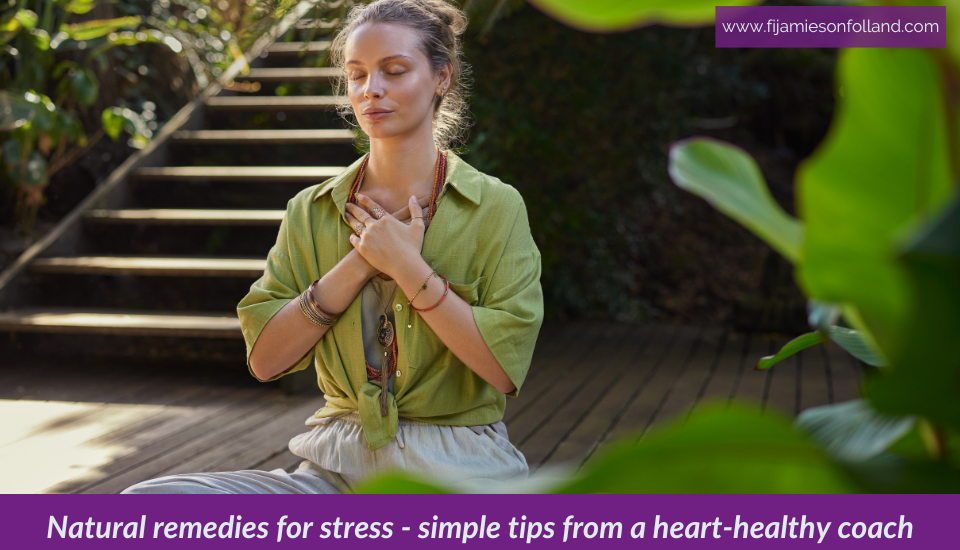
Stress has a way of sneaking into our lives quietly at first, showing up as tension in our shoulders, shallow breathing, restless sleep, or that constant feeling of being slightly behind, and before we know it, it has woven itself into our daily rhythm in ways that deeply affect the heart.
As a healthy-heart coach, I see this often – when we focus on external habits while overlooking the internal state that shapes how our heart responds to everything else.
Stress is not just an emotional experience.
It is a physiological one, and the heart feels it immediately.
The really positive part is that the body also responds just as quickly to natural remedies that restore calm, balance, and safety.
You don’t need complicated routines or extreme lifestyle overhauls to support your heart through stress relief.
What you need is consistency, self-awareness, and a willingness to listen to what your body has been asking for all along.
Understanding stress through a heart-centred lens
The heart is incredibly responsive to the nervous system.
When stress becomes chronic, the heart works harder than it needs to, adapting to a state of constant alert that was never meant to be permanent.
This does not mean stress is bad or something to eliminate.
Short-term stress helps us respond, focus, and protect ourselves.
The problem arises when the body never receives the signal that it is safe to stand down.
Natural stress remedies work by reminding the body that safety is available, not someday – right now.
When that message lands, the heart softens, the rhythm steadies, and the resilience improves.
Breathing is the fastest natural stress remedy
Breathing is one of the most underrated tools for heart health, largely because it feels too simple to be powerful. 1
Yet breath is the quickest way to communicate directly with the nervous system.
Slow, intentional breathing signals the heart to shift out of urgency and into regulation.
Even a few minutes can lower heart rate, improve circulation, and reduce the physical load stress places on the cardiovascular system.
What matters is not perfection. Instead, it’s awareness.
Longer exhales, gentle pauses, and breathing through the nose all encourage calm without forcing the body into unnatural patterns.
You can use breath while standing in line, sitting at a desk, or lying in bed, which makes it one of the most accessible heart-supportive tools available.
Movement that soothes rather than stimulates
Not all movement reduces stress.
Some forms can actually add to it if they are approached with pressure or comparison.
Heart-healthy stress relief comes from movement that feels grounding rather than demanding.
This might be walking without tracking steps, stretching without an agenda, or moving to music simply because it feels good.
When movement is intuitive, it helps release stored tension, improve circulation, and remind the heart that effort can exist without urgency.
This kind of movement supports longevity because it is sustainable and kind to the nervous system.
Nature as a nervous system reset
There is something profoundly regulating about being in natural environments.
The heart responds to greenery, fresh air, natural light, and open space in deeply restorative ways.
Time outdoors does not need to be dramatic or remote to be effective.
A short walk among trees, sitting near water, or even tending to plants can reduce stress signals and promote heart rhythm balance.
Nature invites the body into a slower tempo, one that aligns with how the heart prefers to function over the long term.
The overlooked power of daily transitions
Stress often accumulates not during major events, but instead during the small transitions we rush through every day. Moving from task to task without pause keeps the heart in a constant state of readiness.
One natural remedy is creating intentional transitions.
This might mean taking three deep breaths before starting something new, stretching briefly between activities or mentally closing one chapter before opening the next.
These micro moments of regulation prevent stress from stacking and give the heart frequent opportunities to reset.
Nourishment as emotional regulation
Food is often discussed only in terms of nutrients, although nourishment also plays a role in emotional balance and stress resilience.
Eating in a rushed, distracted state can increase stress responses, even if the food itself is wholesome.
Slow, mindful eating supports digestion, stabilises energy, and reduces nervous system activation.
Warm foods, familiar flavours, and regular meals create a sense of predictability that the heart and brain find comforting.
This is not about restriction or perfection – rather it’s about using meals as anchors in the day that support calm and consistency.
Sleep as a natural stress remedy for the heart
Sleep is one of the most powerful tools for heart health, yet it is often sacrificed in the name of productivity.
When sleep is insufficient or irregular, stress hormones remain elevated, and the heart does not receive adequate recovery time.
Creating a sleep-supportive environment does not require elaborate routines.
Dimming lights, limiting stimulation before bed, and maintaining consistent sleep times help the nervous system unwind.
Quality sleep strengthens stress tolerance during waking hours, making it easier for the heart to handle challenges without strain.
Emotional expression as heart protection
Unexpressed emotions are a hidden source of stress.
When feelings are suppressed, the body often carries them through muscle tension, altered breathing, and cardiovascular load.
Natural stress relief includes allowing emotions to move through rather than linger. This can look like journaling, talking with a trusted person, or engaging in creative expression.
Emotional release is not about re-living stress, but about giving it a place to go, freeing the heart from carrying unresolved weight.
Social connection as a calming force
The heart responds positively to connection.
Supportive relationships lower stress responses and increase feelings of safety and belonging.
Connection does not need to be constant or overwhelming.
Even brief, meaningful interactions can reduce stress and support cardiovascular balance.
Laughter, shared experiences, and feeling understood all send calming signals that the heart recognizes immediately.
Creating boundaries as stress medicine
One of the most effective natural remedies for stress is learning where your limits are and honouring them.
Chronic overextension keeps the heart in a state of vigilance.
Boundaries are not walls; they are guidelines that protect energy and emotional resources. Saying no, asking for help, and prioritising rest are all acts of heart care.
Over time, boundaries reduce baseline stress and allow the heart to operate from a place of balance rather than defence.
Sensory regulation for instant calm
The senses provide direct access to the nervous system.
Soothing sensory input can help quickly reduce stress and support a healthy heart rhythm.
Soft lighting, calming music, pleasant scents, and comfortable textures all communicate safety. These elements are especially helpful during high-stress periods or at the end of the day.
Creating a sensory environment that supports calm turns everyday spaces into tools for heart health.
Mental habits that ease heart strain
Stress is amplified by certain thought patterns, especially those rooted in urgency or self criticism. Gentle awareness of mental habits allows for more compassionate self-talk.
Reframing challenges, practicing gratitude, or simply noticing when the mind spirals can reduce emotional stress load.
The heart responds to these shifts by settling into steadier rhythms.
Routine as a stabilising force
Predictability is calming for the nervous system. Simple routines provide structure that reduces decision fatigue and background stress.
Morning rituals, consistent meal times, and evening wind-down habits all support heart health by signalling safety and stability.
Routines do not need to be rigid to be effective.
Flexibility combined with consistency allows the heart to trust that rest and care are built into daily life.
Why natural stress remedies support longevity
Longevity is not just about adding years; it is about preserving vitality.
Chronic stress accelerates wear on the heart, while regular stress regulation slows that process.
Natural remedies work with the body rather than against it.
They support adaptability, resilience, and recovery, all of which are essential for long-term heart health.
Over time, these small practices accumulate, shaping how the heart ages and how the body experiences life.
Stress relief across different life stages
Stress looks different at every age, and it’s ideal for stress relief to reflect this.
Children benefit from play, routine, and emotional validation.
Adults often need boundaries, restorative movement, and intentional rest.
Older adults thrive with connection, purpose, and gentle rhythm.
Natural remedies are adaptable, making them accessible at any stage of life.
The heart benefits whenever stress is addressed with care and consistency.
The importance of self-compassion
Many people approach stress management with another layer of pressure.
True stress relief includes kindness toward yourself.
Progress is not linear.
Some days will feel calmer than others.
What matters is returning to practices that support balance without judgment.
A compassionate approach reduces emotional stress and creates a healthier relationship with your body and heart.
Stress management as an act of respect for the heart
Managing stress is not indulgent or optional.
It is one of the most respectful things you can do for your heart.
Each time you pause, breathe, rest, or choose ease over urgency, you are supporting a system that works tirelessly on your behalf.
The heart responds to care with strength, adaptability, and longevity.
Bringing it all together
Natural remedies for stress are not about fixing yourself. They are about remembering how to listen.
Your body already knows how to return to balance. These practices simply create the conditions that allow it to do so.
When stress is managed gently and consistently, the heart is given the space it needs to thrive.
This is how heart health becomes a daily practice rather than a distant goal.
See you on this week’s #AlivewithFi 🙂
Fi Jamieson-Folland D.O., I.N.H.C., is The LifeStyle Aligner. She’s an experienced practitioner since 1992 in Europe, Asia and New Zealand as a qualified Osteopath, Integrative Nutrition Health Coach, speaker, educator, writer, certified raw vegan gluten-free chef, and Health Brand Ambassador.

Facebook Instagram LinkedIn Pinterest YouTube
1 Interesting research showing slow breathing benefits for the cardiovascular system (review, 2017) – https -//pubmed.ncbi.nlm.nih.gov/29209423/