
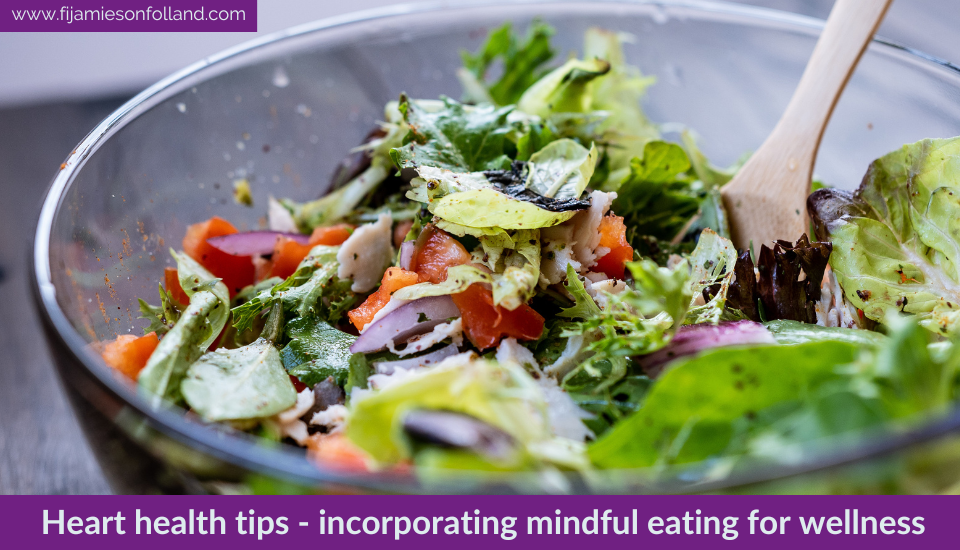
If there’s one place where heart health guidance has perhaps gone slightly off course over the years, it is in how we talk about eating, because somewhere along the way food became a battlefield of rules, numbers, and pressure.
Meanwhile, our hearts quietly kept responding not just to what was eaten – also to how, when, and why it was eaten.
Mindful eating is not a soft or fluffy concept, it is a powerful physiological practice that influences heart rhythm, blood pressure patterns, stress hormones, digestion, and long-term cardiovascular resilience in ways that are both measurable and deeply human. 1
Mindful eating is not about eating perfectly, eating slowly all the time, or turning every meal into a meditation, it is about restoring communication between the brain, the gut, the nervous system, and the heart, so that nourishment becomes supportive rather than stressful.
The heart does not experience food in isolation.
It experiences the anticipation, the pace, the emotional state, the blood sugar response, the digestive workload, and the nervous system tone that surrounds each meal. When eating happens in a rushed, distracted, or tense state, the heart receives a very different message than when eating happens with presence and care, even if the food itself is identical.
This is why mindful eating belongs in every heart health conversation.
Before we talk about any specifics, it helps to understand why the heart is so sensitive to the eating experience.
Digestion is governed largely by the parasympathetic nervous system, the same branch that supports recovery, repair, and cardiovascular calm.
When this system is activated, heart rate variability improves, blood vessels relax, and metabolic processes become more efficient.
When meals are eaten under stress, the sympathetic nervous system dominates, diverting energy away from digestion and toward vigilance, which increases heart workload and disrupts metabolic balance.
Mindful eating is, at its core, a way of shifting the body into a state where the heart can relax while being nourished.
One of the simplest yet most profound heart health tips is to begin meals with a pause. This does not need to be dramatic or ceremonial.
A single breath before eating, a moment to notice the food in front of you, or a quiet acknowledgment that you are about to nourish your body is often enough to change nervous system tone. This pause signals safety and tells the heart that it does not need to brace itself.
Over time, this small ritual can shift baseline stress patterns around food.
Chewing
Chewing is another underrated component of mindful eating that has direct implications for heart wellness. Proper chewing initiates digestion, reduces gastrointestinal strain, and supports more stable blood sugar responses.
When food is rushed, larger particles enter the digestive system, increasing metabolic effort and stress signalling. Slowing down chewing is not about counting bites, it is about giving the body time to recognise fullness and satisfaction, reducing overeating and the cardiovascular strain that follows heavy, hurried meals.
Mindful eating also involves paying attention to hunger and fullness cues, which are not static rules, instead they’re dynamic signals that change day to day.
The heart benefits when the body is fed adequately and consistently.
Ignoring hunger for long periods increases stress hormone output, destabilises blood sugar, and places extra demand on the cardiovascular system. Eating past comfortable fullness can also strain digestion and circulation.
Mindfulness helps recalibrate these signals so eating becomes responsive rather than reactive.
Distraction is one of the most common barriers to heart-supportive eating.
Screens, work, news, and constant stimulation keep the nervous system in a heightened state even while eating. When the mind is elsewhere, the body often misses satiety cues, digestion is impaired, and stress responses remain elevated.
You do not need to eliminate all distractions at every meal. Instead, creating even one screen-free meal per day can significantly improve how the heart responds to nourishment.
The quality of attention matters more than rigid rules.
Another aspect of mindful eating that directly supports heart health is emotional awareness. Many people eat not only to satisfy physical hunger – they also eat to regulate emotions, soothe stress, or create comfort.
This is not a flaw, it is a human adaptation. The challenge happens when emotional eating happens unconsciously, accompanied by guilt or shame, which amplifies stress rather than relieving it.
Mindful eating invites curiosity instead of judgment, allowing you to notice emotional triggers and respond with compassion. When emotional needs are acknowledged, the heart experiences less internal conflict.
Pleasure is an often-overlooked component of heart wellness.
Enjoyment during meals activates reward pathways that counterbalance stress chemistry. When food is eaten with pleasure, digestion improves, satisfaction increases, and the urge to overeat diminishes.
This does not require indulgence at every meal, it requires permission to enjoy what you eat without anxiety.
The heart responds positively to pleasure because pleasure signals safety.
Texture, temperature, and flavour variety also influence mindful eating in subtle ways. Meals that include a mix of textures and flavours naturally slow eating and increase sensory engagement.
Warm foods can be grounding and calming, while fresh foods can feel energising and light. Tuning into these sensations brings you into the present moment, which is where the nervous system finds balance.
This sensory engagement is a form of mindfulness that supports heart rhythm stability.
Mindful eating also means respecting timing.
Late-night eating under exhaustion or emotional strain often disrupts sleep and metabolic recovery, indirectly affecting heart health. This does not mean rigid cut-offs or rules, it means noticing how timing affects your energy, sleep, and stress levels.
When meals align with your natural rhythms, the heart benefits from improved recovery overnight. Portion awareness is another gentle aspect of mindful eating that supports cardiovascular wellness.
This is not about measuring or restricting, it is about noticing how different portions make you feel. Meals that leave you energised rather than heavy support better circulation and metabolic efficiency.
Mindfulness allows you to adjust portions intuitively over time rather than relying on external guidelines.
Single focus
One of the most transformative heart health tips is learning to eat without multitasking. Eating while driving, working, or standing often leads to rapid consumption and poor digestion.
Sitting down, even briefly, tells the nervous system that it is safe to rest. This posture change alone can influence heart rate patterns and digestive efficiency.
Presence does not require long meals, it requires intention.
Mindful eating also extends to food choices, although not in the way most of us might expect. Rather than categorising foods as good or bad, mindfulness encourages noticing how foods make you feel physically and emotionally.
Some foods feel grounding, others feel stimulating, whilst others feel heavy or light. This awareness allows you to choose foods that support your current needs rather than following rigid plans.
The heart thrives when food choices are responsive rather than dogmatic.
Cultural and social contexts matter deeply in mindful eating.
Shared meals, traditions, and familiar foods create a sense of belonging that lowers stress hormones. Eating alone or in isolation can increase stress even if the food is technically nutritious.
Whenever possible, incorporating connection into meals supports emotional and cardiovascular health. Conversation, laughter, and shared presence are heart-supportive nutrients in their own right.
How much?
Mindful eating also involves recognising when the body needs more nourishment rather than less. Periods of high stress, illness, or emotional strain often increase energy needs.
Restricting food during these times can amplify stress responses and burden the heart. Listening to increased hunger with curiosity rather than fear supports resilience.
Rest days, recovery periods, and emotional processing all require fuel.
Internal dialogue
One subtle however powerful heart health tip is to notice internal dialogue around food. Critical or anxious thoughts activate stress responses even before eating begins.
Shifting self-talk toward neutrality or kindness can change how the body processes food. This mental environment influences digestion, absorption, and cardiovascular responses.
Mindfulness includes awareness of thought patterns as much as physical sensations.
Preparation also plays a role in mindful eating.
Meals prepared with care, even simple ones, carry a different energy than rushed, last-minute eating. Preparation allows for anticipation, which can activate digestive processes and calm the nervous system.
This does not require elaborate cooking, it requires intention. Even assembling a simple meal mindfully can shift how the heart responds.
Mindful eating encourages flexibility rather than rigidity.
Some meals will be rushed, distracted, or emotionally charged, and that is part of life. The goal is not perfection – instead it’s positive pattern-ing.
Returning to presence when possible builds resilience over time. The heart responds to overall trends, not isolated moments.
Gratitude
Another important dimension is gratitude, not as a forced practice, rather as a gentle acknowledgment of nourishment. Gratitude shifts attention away from stress and toward appreciation, which has measurable effects on nervous system balance.
A simple moment of appreciation before or after a meal can influence heart rhythm patterns. This is not about positivity, it is about connection.
Mindful eating also helps repair trust with the body.
Many people living with heart concerns feel betrayed by their bodies. Rebuilding trust through listening, responding, and honouring signals reduces internal tension.
This internal harmony supports cardiovascular health in ways that numbers alone cannot capture. The heart thrives in an environment of cooperation rather than control.
A gateway
Mindful eating can often become a gateway to broader wellness. People begin to notice sleep needs, stress patterns, and emotional cues more clearly.
This awareness creates a ripple effect that supports heart health beyond the plate. Food becomes a daily practice of self-connection rather than a source of stress.
Incorporating mindful eating for wellness
This does not require dramatic changes – rather it begins with small, consistent moments of presence…
A breath before eating.
A pause halfway through a meal.
A check-in with fullness.
A moment of enjoyment.
These moments accumulate. Over time, they change how the nervous system relates to food, how metabolism responds, and how the heart experiences nourishment.
Your heart does not need perfect meals.
It needs meals that are eaten with enough calm that digestion can happen, blood sugar can stabilise, and stress can soften. Mindful eating offers a way to meet these needs without adding pressure.
It invites you into a more compassionate, sustainable relationship with food and with your heart. When eating becomes an act of awareness rather than control, wellness follows naturally.
Our hearts responds not just to nutrients – they respond to the care with which they are received.
See you on this week’s #AlivewithFi ☺
Fi Jamieson-Folland D.O., I.N.H.C., is The LifeStyle Aligner. She’s an experienced practitioner since 1992 in Europe, Asia and New Zealand as a qualified Osteopath, Integrative Nutrition Health Coach, speaker, educator, writer, certified raw vegan gluten-free chef, and Health Brand Ambassador.

Facebook Instagram LinkedIn Pinterest YouTube
1 Mindful eating reduces cardiometabolic risks (body weight, glucose, inflammation). Review -Iaccarino Idelson et al. (2024).
– https://www.mdpi.com/2674-0311/3/3/22