
All of the physical measurements we can take to monitor our health (eg blood pressure, weight, activity level etc) can be important, however there’s another part of the heart-health picture that deserves far more attention – the relationship between our mind, body and soul.
Your heart doesn’t operate independently from the rest of you. The thoughts you think, the emotions you carry, the quality of your sleep, the way you breathe, your relationships and whether you feel connected to something meaningful can all influence how you experience life and how your nervous system responds to it.
This is why I love the idea of integrated heart health. Rather than seeing the heart as an isolated organ that needs to be managed, we can begin to see cardiovascular wellbeing as part of a much bigger picture.
Your heart listens to your nervous system
One of the most important connections to understand is the relationship between your nervous system and your heart.
When life constantly feels rushed, demanding or overwhelming, the body can spend far too much time in a heightened state of alertness. We’re designed to experience periods of stress followed by recovery, however modern life can make it surprisingly difficult to truly switch off.
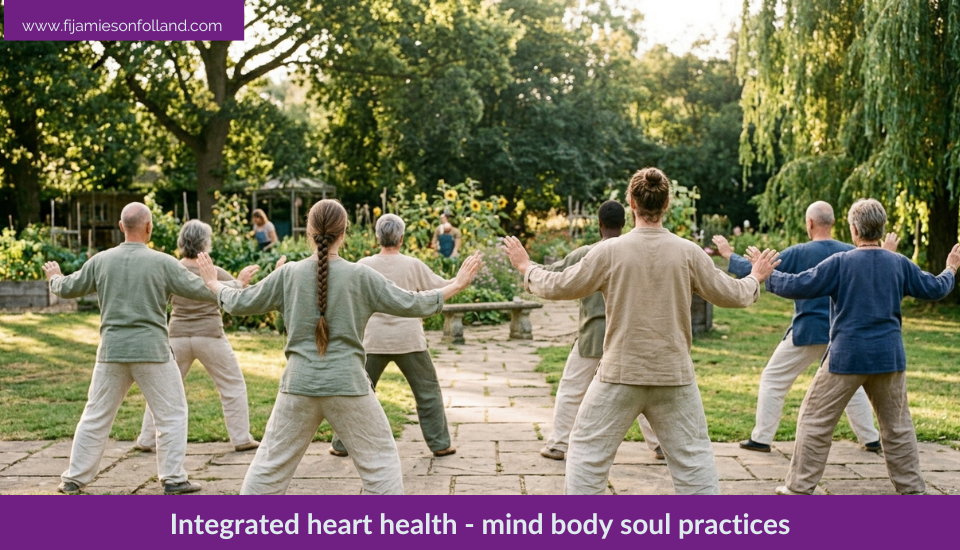
This is where practices such as meditation, mindfulness, slow breathing, yoga, tai chi, prayer or simply sitting quietly can become valuable. They aren’t about escaping your life or pretending stress doesn’t exist. They are ways of creating moments where your body receives the message that it is safe enough to slow down.
And there’s research behind this connection. A systematic review and meta-analysis examining mindfulness-based interventions in adults with cardiovascular disease found improvements in psychological outcomes including anxiety, depression, distress and perceived stress, along with an improvement in systolic blood pressure compared with control groups.
This doesn’t mean meditation alone can prevent or reverse heart disease, however it does support the idea that caring for the mind and nervous system deserves a place within an integrated approach to heart health 1
Breathe your way towards calm
Breathing is one of the simplest tools we have because it’s always with us, yet we rarely think about how powerful it can be.
When we’re stressed, our breathing can become faster and shallower. Deliberately slowing our breath can create a pause between what is happening around us and how our body responds.
You don’t need an elaborate technique.
Sit comfortably, relax your shoulders and breathe gently through your nose, allowing the exhalation to become slightly longer than the inhalation. Even a few minutes can create a very different internal experience.
The important thing isn’t perfection – it’s consistency.
Move your body in a way that feels good
Exercise is important for cardiovascular health, however movement doesn’t always have to mean pushing yourself harder.
Walking, swimming, yoga, cycling, dancing, stretching or simply moving regularly throughout the day can all become opportunities to reconnect with yourself.
There’s something particularly powerful about combining movement with awareness. Instead of exercising while mentally racing through your to-do list, occasionally pay attention to your breathing, the movement of your body, your surroundings and how you feel.
Movement then becomes more than something you have to do – it becomes a way of being present in your body.
Don’t underestimate the power of nature
There is something deeply restorative about being outside. Fresh air, natural light, trees, birds, changing scenery and simply stepping away from screens can help create a sense of calm.
You don’t need to spend hours hiking through a forest (although it’s wonderful if you can!) A walk around the neighbourhood, gardening, sitting beneath a tree or having your morning green tea outside can provide a valuable transition from a busy internal world to a more grounded state.
I particularly love combining nature with movement. A walk becomes more than exercise; it becomes an opportunity to breathe, observe, reflect and reconnect.
Give relationships a place at the heart of your health
Heart health isn’t only about what happens inside your body. It’s also about what happens in your life.
Meaningful relationships provide connection, belonging and emotional support. Sometimes caring for your heart might mean changing your diet or becoming more active. However sometimes it might mean picking up the phone and calling someone you love, sharing a meal with a friend or creating more opportunities for genuine conversation.
We can become so focused on optimising our physical health that we forget one of the most basic human needs of all – connection.
Make sleep part of your heart-health strategy
Sleep is another area where mind, body and soul come together.
When we’re tired, our emotional resilience can suffer, our ability to cope with stress can diminish and healthy choices can become harder.
Rather than treating bedtime as the moment when you suddenly have to switch your brain off, think of the hour beforehand as a gradual transition from doing to being.
Dim the lights, step away from stimulating content, read something calming, practise a few slow breaths or spend a few minutes reflecting on what went well that day.
Feed the soul as well as the body
The word ‘soul’ means different things to different people. It might involve spirituality or prayer. It could also mean creativity, music, nature, gratitude, service, relationships or having a strong sense of purpose.
Whatever it means to you, ask yourself – what makes me feel truly alive?
Because heart health isn’t simply about adding years to your life – it’s also about adding life to those years.
You can have a wonderful diet and exercise routine, although if your life is devoid of joy, connection, meaning and moments that make you feel grateful to be here, something important is still missing.
Your heart is part of your whole story
Perhaps the biggest shift is moving away from thinking about heart health as something we simply manage and instead seeing it as something we nurture.
Your heart is connected to your nervous system, sleep, movement, relationships, emotional wellbeing and sense of meaning. These practices aren’t magic cures, nor can they replace appropriate medical care when it is needed – yet they’re meaningful parts of the environment in which your heart functions every day.
So instead of asking, what else should I do for my heart?, perhaps it can be useful to ask a different question –
How can I create a life that allows my whole body, mind and soul to feel more supported?
Sometimes the answer might be found in the food on your plate or the exercise you do.
And sometimes it will be found in a quiet walk, a deep breath, a good night’s sleep, a heartfelt conversation, time in nature or simply giving yourself permission to slow down.
Because when we look at heart health through a truly integrated lens, we begin to understand that caring for your heart isn’t just about looking after one organ.
It’s about looking after each of us as whole people.
See you on this week’s #AlivewithFi 🙂
Fi Jamieson-Folland D.O., I.N.H.C., is The LifeStyle Aligner. She’s an experienced practitioner since 1992 in Europe, Asia and New Zealand as a qualified Osteopath, Integrative Nutrition Health Coach, speaker, educator, writer, certified raw vegan gluten-free chef, and Health Brand Ambassador.

Facebook Instagram LinkedIn Pinterest YouTube
1 Mindfulness-Based Interventions for Adults with Cardiovascular Disease – A Systematic Review and Meta-Analysis
https -//pubmed.ncbi.nlm.nih.gov/31167026/