
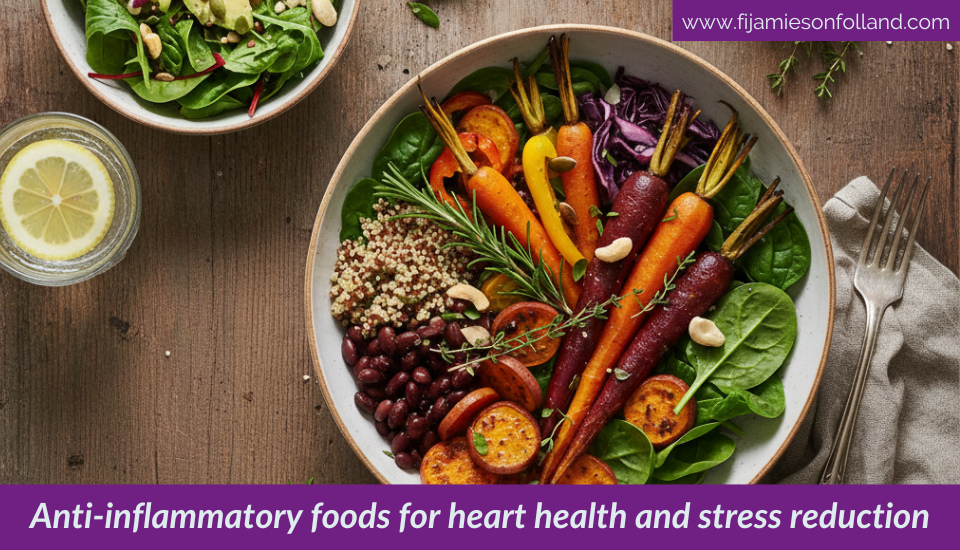
When people think about heart health, they often picture numbers, tests, or strict rules, whereas the truth is that your heart responds just as much to how nourished and soothed your body feels as it does to anything measurable.
Food is not only fuel, it is information.
Every bite sends a message that either calms inflammation and stress or quietly adds to them.
Anti-inflammatory foods are a valuable subject because they sit at the intersection of physical protection and emotional support.
These are not foods that punish the body or demand perfection.
They are foods that help the heart feel safe, supported, and steady, especially in a world that asks a lot of our nervous systems.
Inflammation and stress are deeply connected -when stress is ongoing, inflammation often rises.
When inflammation is high, the body becomes more reactive to stress.
Anti-inflammatory eating gently interrupts this cycle, offering the heart relief on multiple levels.
Understanding inflammation through a heart health lens
Inflammation is the body’s natural response to injury or threat, and in short bursts, it is protective and necessary.
The challenge begins when inflammation becomes chronic and low grade, lingering beneath the surface without resolution.
For the heart, chronic inflammation can influence blood vessel health, circulation, and overall cardiovascular resilience. It can also amplify our stress responses, making us feel like we’re constantly on edge even when nothing is immediately wrong.
Anti-inflammatory foods do not work by forcing the body into balance. Instead they work by creating an internal environment where balance becomes easier to maintain.
Stress, food, and the nervous system
Stress changes how the body processes food, and when you’re stressed, digestion often slows or becomes less efficient, which can increase inflammation and discomfort.
At the same time, stress tends to push people toward foods that are quick, stimulating, or emotionally comforting in the short term, although not necessarily calming for the body long term.
Anti-inflammatory eating supports the nervous system by emphasising foods that stabilise energy, support digestion, and reduce internal irritation.
This creates a feedback loop where stress becomes easier to manage and the heart experiences less strain.
What anti-inflammatory eating really means
Anti-inflammatory eating is not about eliminating entire food groups or chasing superfoods, it’s about patterns…
…and choosing foods that the body recognises and responds to with ease.
These foods tend to be rich in natural colour, fibre, healthy fats, and plant compounds that support cellular repair. They also tend to be foods that feel grounding rather than over stimulating.
The goal is not dietary purity – it’s for nourishment that helps the heart feel steady and supported over time.
Fruits and vegetables as daily heart allies
Colourful fruits and vegetables are foundational to anti-inflammatory eating. 1
They provide antioxidants and phytonutrients that help calm inflammatory processes and support blood vessel health.
What matters most is variety rather than perfection. Deep greens, warm reds, bright oranges, and rich purples all offer different forms of protection.
Rather than focusing on large portions, consistency is key. Small amounts, eaten regularly, create cumulative benefits for heart health and stress resilience.
Healthy fats that soothe rather than stimulate
Fats play a crucial role in inflammation and emotional regulation. Certain fats support the heart by improving cellular communication and reducing inflammatory signalling.
Foods like olive oil, nuts, seeds, and avocados provide fats that are both satisfying and calming for the nervous system. They help stabilise blood sugar and reduce the sharp energy swings that can heighten stress responses.
Including healthy fats regularly allows meals to feel more grounding and sustaining, which the heart appreciates.
Whole foods that support steady energy
Highly fluctuating energy levels place stress on the heart, whereas anti-inflammatory eating emphasises foods that release energy gradually rather than all at once.
Legumes, and fibre rich foods, and whole grains slow digestion and support more balanced blood sugar patterns. This steadiness reduces stress hormones and supports cardiovascular stability.
Meals built around steady energy help the body feel secure rather than reactive.
Herbs and spices as quiet protectors
Herbs and spices are often overlooked in conversations about heart health, although they offer powerful anti-inflammatory support. Many also provide sensory comfort, which reduces stress on a subtle yet meaningful level.
Using herbs and spices in cooking adds warmth, depth, and satisfaction without relying on excess stimulation. They support digestion, circulation, and emotional enjoyment, each of which benefit the heart.
Food that tastes good and feels comforting is more likely to be eaten mindfully and consistently.
The emotional experience of eating matters
How you eat matters just as much as what you eat. Eating while rushed, distracted, or tense can increase stress responses even if the food itself is nourishing.
Anti-inflammatory eating includes slowing down enough to enjoy meals, and this allows digestion to function properly. It also sends calming signals to the heart.
Creating even a few moments of presence around meals turns eating into a form of stress reduction rather than another task to rush through.
Warm foods and the stress response
Room temperature or warm foods tend to be more calming for the nervous system than very cold or highly processed options. They support digestion and create a sense of comfort and safety.
Soups, stews, activated raw pizza fresh from the dehydrator, roasted vegetables, and warm chia bowls can be especially supportive during periods of high stress. They signal nourishment and care, which reduces internal tension and supports heart rhythm.
Protein choices and inflammation balance
Protein supports muscle, energy, and emotional stability. Choosing protein sources that are easy to digest and minimally processed supports anti-inflammatory goals.
Plant based proteins, eggs, and thoughtfully prepared, organic animal proteins can all fit within an anti-inflammatory pattern when paired with fibre (including organic greens) and healthy fats.
What matters is how protein fits into the overall meal rather than any single source being labelled as perfect.
Gut health and heart health are connected
The gut plays a major role in inflammation and stress regulation. When digestion is supported, inflammatory signals decrease and emotional resilience improves.
Fibre rich foods, fermented foods, and diverse plant intake help maintain a balanced internal environment. This balance reduces systemic inflammation and supports heart health indirectly yet powerfully.
Hydration as an anti-inflammatory habit
Hydration supports circulation, digestion, and cellular function. And even mild dehydration can increase stress on the body and heart.
Regular fluid intake supports blood flow and reduces strain on the cardiovascular system. Warm or room temperature beverages can be especially calming for the nervous system.
Reducing inflammatory load without restriction
Anti-inflammatory eating is not about strict avoidance. Instead, it’s about reducing overall inflammatory load through consistent supportive choices.
Perfection creates stress, which actually defeats the purpose. Flexibility allows the body to relax, which enhances the benefits of nourishing foods. The heart benefits more from a relaxed, sustainable approach than from rigid rules.
Food routines that reduce stress
Predictability reduces stress and regular meal times with familiar foods help the nervous system relax.
When the body knows nourishment is coming, stress hormones decrease.
This predictability supports heart health by reducing background tension. Simple routines are often more effective than complex plans.
Anti-inflammatory snacks that support calm
Snacks can either stabilise energy or spike stress. Choosing snacks that combine fibre, fat, and protein helps maintain balance. In turn, this reduces sharp drops in energy that can trigger stress responses.
The heart benefits from steady fuel throughout the day.
Seasonal eating and emotional balance
Eating foods that align with the season can support both inflammation balance and emotional well being. Seasonal foods tend to feel more satisfying and grounding.
This natural rhythm supports the body’s internal cycles and reduces stress related to constant decision making.
Cultural and personal preferences matter
Anti-inflammatory eating is not one size fits all. Cultural traditions, personal tastes, and emotional associations with food all influence how nourishing a meal feels.
Honouring these factors reduces stress and increases enjoyment, which enhances the heart protective effects of food.
Anti-inflammatory eating during high stress periods
During periods of intense stress, simplicity becomes especially important.
Easy to digest, familiar foods can provide comfort and stability.
This is not the time for drastic dietary changes – as gentle nourishment supports resilience and helps prevent stress from escalating inflammation.
Long term heart protection through daily choices
Anti-inflammatory foods work through accumulation. Each meal is an opportunity to support the heart a little more.
Over time, these choices influence inflammation levels, stress tolerance, and cardiovascular resilience. This is how food becomes a tool for longevity rather than just fuel.
Letting food be supportive rather than stressful
Many people turn food into another source of pressure, and anti-inflammatory eating can invite a softer approach.
It’s idea for food to support your life, not control it. When eating feels kind and nourishing, the heart responds positively.
Bringing it all together
Anti-inflammatory foods support heart health by calming the internal environment and reducing the physical impact of stress. They work best when paired with mindful eating, flexibility, and consistency.
This is not about chasing perfection or following trends. It’s about creating a way of eating that helps your heart feel steady, supported, and resilient.
When food reduces inflammation and stress, the heart is free to do what it does best, carry you through life with strength, rhythm, and grace.
See you on this week’s #AlivewithFi 🙂
Fi Jamieson-Folland D.O., I.N.H.C., is The LifeStyle Aligner. She’s an experienced practitioner since 1992 in Europe, Asia and New Zealand as a qualified Osteopath, Integrative Nutrition Health Coach, speaker, educator, writer, certified raw vegan gluten-free chef, and Health Brand Ambassador.

Facebook Instagram LinkedIn Pinterest YouTube
1 Should we ‘eat a rainbow’? An umbrella Review (Blumfield M et al. (2022). Finds variety in colorful fruit/veg pigments reduces inflammation markers (e.g., CRP) and CVD risk