
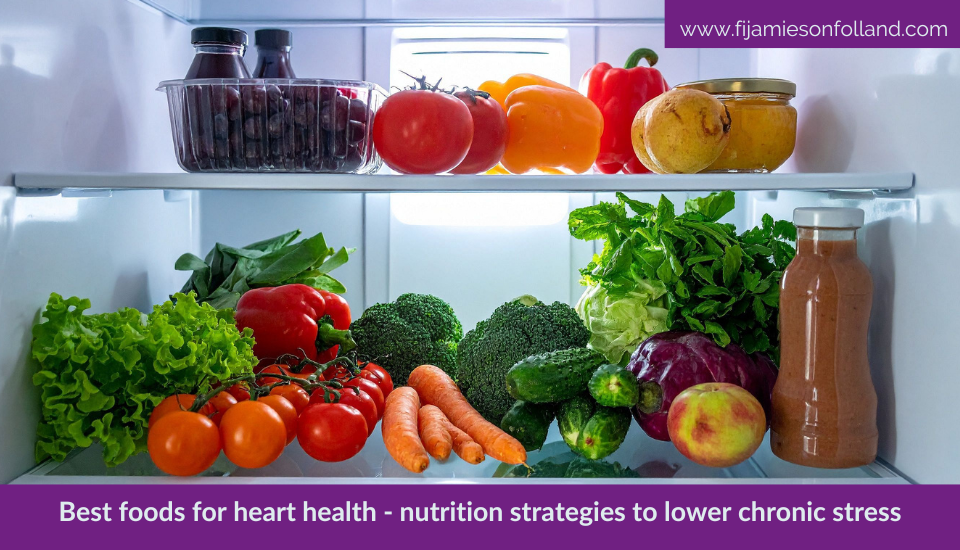
If you’ve ever been told to eat for your heart as though food were a moral test or a rigid prescription, I’d like to suggest that you to consider an alternative approach, because heart-supportive eating, especially when chronic stress is part of the picture, is not about control, deprivation, or chasing the perfect plan, it is about creating a physiological sense of safety so the heart can soften its grip and the nervous system can finally exhale.
Chronic stress does not live solely in the mind; it lives in the body, in blood sugar swings, in tense muscles, in shallow breathing, in inflammatory signals, and very specifically in how the heart responds to the environment it is placed in every single day.
Food is one of the most powerful daily messages we send to the heart, not just because of nutrients – it’s because of rhythm, predictability, pleasure, and nourishment, all of which directly influence stress physiology.
When the body perceives scarcity, chaos, or inconsistency around food, stress hormones rise and the heart adapts accordingly, beating in a biochemical environment that asks it to stay alert.
When food communicates safety, stability, and care, stress chemistry quiets and the heart benefits almost immediately.
This is why the best foods for heart health are not just those that support blood sugar balance, non-oxidised cholesterol balance or vascular tone, they are foods that lower chronic stress by stabilising metabolism, supporting the nervous system, and reducing inflammatory load.
Blood sugar
Blood sugar is a great place to start, because nothing stresses the heart faster or more quietly than repeated glucose highs and lows.
Every spike and crash sends a signal to the nervous system that resources are uncertain, prompting stress hormone release and placing additional demand on the cardiovascular system.
Foods that stabilise blood sugar are foundational for lowering chronic stress, and this is not about avoiding carbohydrates, it is about pairing them wisely.
Meals anchored with adequate protein, fibre-rich plants, and natural fats slow digestion, steady glucose entry into the bloodstream, and prevent the adrenaline-driven dips that leave people shaky, irritable, or exhausted.
This kind of stability allows the heart to beat in a calmer internal environment rather than riding metabolic waves all day.
Protein
Protein plays a particularly important role here, not as a muscle-building obsession, instead as a stress-buffering nutrient that supports neurotransmitter production, satiety hormones, and blood sugar balance.
When protein is consistently included at meals, the nervous system relaxes its vigilance, cravings soften, and energy becomes more even, which directly benefits heart rhythm and vascular tone.
The key is variety rather than fixation, rotating sources so the body receives a broad spectrum of amino acids and micronutrients without monotony or digestive strain.
Fibre
Fibre-rich foods are another cornerstone of stress-lowering heart nutrition, yet they are often discussed only in terms of digestion or cholesterol. Fibre feeds beneficial gut microbes that produce compounds influencing inflammation, blood pressure regulation, and even stress hormone metabolism.
When the gut is supported, the immune system calms, inflammatory signalling decreases, and the heart feels less internal resistance.
Vegetables, legumes, fruits, seeds, and whole plant foods bring texture, colour, and diversity to meals, which is not just nutritionally and physiologically beneficial 1 –they’re also psychologically grounding.
There is something inherently calming about eating foods that look alive.
Healthy fats
Natural fats deserve a more nuanced conversation when stress and heart health intersect. Fats slow digestion, enhance nutrient absorption, and contribute to hormonal balance, all of which help stabilise stress responses.
Rather than fearing fat, heart-supportive eating emphasises quality, freshness, and balance, choosing fats that support cellular membranes and inflammatory regulation.
When fat intake is adequate and consistent, the body does not feel the need to overproduce stress hormones to mobilise energy, and the heart experiences a steadier workload.
Minerals
Minerals are another quiet yet powerful ally in lowering chronic stress through food. For example, magnesium-rich foods support nervous system relaxation, muscle function, and heart rhythm stability.
Potassium-rich foods help regulate vascular tone and fluid balance, easing pressure on the cardiovascular system.
Sodium, often misunderstood, is essential for nerve signalling and adrenal function, and when obtained from whole food sources and balanced with other minerals, it supports rather than stresses the heart.
Chronic stress often depletes these minerals, making replenishment through food an act of repair rather than indulgence.
Regularity
One of the most overlooked diet strategies for lowering chronic stress is regularity. The heart and nervous system thrive on predictable rhythms.
Erratic eating patterns, long fasts followed by overeating, or constant grazing without nourishment all signal instability to the body.
Regular meals that provide enough energy tell the nervous system that resources are available, reducing the need for stress-driven adaptations.
This does not mean eating by the clock rigidly, it means listening for hunger cues and responding consistently enough that the body does not feel forgotten.
Antioxidants
Foods rich in antioxidants also play a role in stress reduction by buffering the oxidative load that increases during chronic stress. Stress accelerates oxidative processes in the body, and the heart, with its high energy demands, is particularly sensitive to this.
Colourful fruits and vegetables, herbs, spices, and deeply pigmented plant foods provide compounds that help neutralise oxidative stress, supporting vascular health and cellular resilience.
Note that eating the rainbow is not a cliché, it’s a practical strategy for protecting our hearts from stress-related wear and tear.
Prep and eating
Another important aspect of heart-supportive eating for stress is how food is prepared and consumed. Highly processed foods often deliver calories without context, stripped of fibre, minerals, and texture, leading to rapid blood sugar changes and little satiety.
Whole and minimally processed foods take longer to chew, digest, and absorb, naturally slowing the eating experience and signalling safety to the nervous system.
This slower pace alone can lower stress responses, even before nutrients are absorbed.
Eating in a calm environment matters more than most people realise.
When meals are rushed, eaten while working, or consumed under emotional strain, the body remains in a sympathetic state, impairing digestion and increasing stress signals.
Creating even small rituals around meals, sitting down, taking a breath, expressing gratitude, chewing thoroughly, can shift the nervous system into a parasympathetic state that supports heart health.
This is not about perfection, it is about intention.
Specific foods
Certain foods have a particularly grounding effect on the nervous system due to their nutrient composition and cultural associations with comfort and nourishment.
Warm foods, slow-cooked meals, soups, stews, and foods that feel satisfying rather than light and insubstantial often signal safety to the body, especially during periods of high stress.
Of course fresh and/or raw foods are vital, it’s about finding the best balance for you and your nervous and cardiovascular systems – allowing you to feel emotionally and physically supported. We’re each unique.
Caffeine
Caffeine is an area where personalisation becomes essential.
While many people enjoy caffeine without issue, for those living with chronic stress or heart concerns, higher levels of intake can amplify stress responses, elevate heart rate, and disrupt sleep, even if these effects are subtle.
Heart-supportive nutrition invites curiosity rather than rules, noticing how caffeine affects mood, energy, and recovery, and adjusting accordingly.
Sometimes lowering stress is less about adding super foods and more about reducing hidden stressors.
Hydration
Hydration also influences stress and heart health in ways that are often underestimated. Even mild dehydration can increase stress hormone levels and place additional demand on the cardiovascular system.
Water supports blood volume, circulation, and cellular function, and when paired with minerals from food, it helps maintain equilibrium. Regular hydration throughout the day, rather than reactive drinking, supports steadier heart rhythms and energy levels.
Our emotions
Emotional relationships with food are closely linked to stress physiology. Restriction, guilt, and anxiety around eating are themselves stressors that activate the nervous system.
A heart-supportive diet for lowering chronic stress must include permission to enjoy food, to eat enough, and to trust the body’s signals.
When food becomes a source of fear, the heart pays the price. When food becomes a source of nourishment and pleasure, stress chemistry shifts in a measurable way.
Variety and social context
Variety can be another powerful stress-lowering strategy.
Eating the same foods every day may feel safe cognitively, although biologically it can limit nutrient diversity and increase sensitivity over time.
Rotating foods introduces new flavours, textures, and micronutrients, keeping the gut microbiome resilient and the nervous system engaged in a positive way.
This gentle novelty supports adaptability, a key feature of both stress resilience and heart health.
Social context around food also matters. Shared meals, even simple ones, create a sense of connection that directly lowers stress hormones and supports heart health.
Loneliness and isolation increase cardiovascular risk, while connection buffers stress. Food can be a bridge here, a way to create moments of togetherness that nourish more than just the body.
One of the most liberating realisations for many people is that heart-healthy eating for stress does not require perfection. Missed meals, indulgent foods, and less-than-ideal choices do not undo progress.
What matters is the overall pattern, the consistent return to nourishment, balance, and self-respect.
The heart responds to trends, not isolated moments.
When stress levels are high, the body often craves quick energy, which is not a failure of willpower – rather it’s a biological response. Meeting these moments with curiosity rather than judgment allows for choices that satisfy without destabilising.
Pairing quick energy foods with protein or fat, slowing down the eating experience, or choosing comforting options that still provide nourishment can prevent stress spirals.
Methods
Cooking methods also influence how food impacts stress. Gentle cooking preserves nutrients and makes foods easier to digest, reducing metabolic strain.
Overly charred or heavily processed foods can increase inflammatory load, subtly adding to stress. Choosing cooking methods that feel supportive rather than harsh is another way to care for the heart through food.
Seasonality can be a helpful guide as well.
Plus eating foods that align with the time of year often supports natural rhythms in energy and digestion, which can lower stress. Heavier, grounding foods may feel more supportive during colder months, while lighter, hydrating foods may suit warmer periods.
Listening to these cues builds trust between you and your body.
Ultimately, the best foods for heart health are those that help your body feel safe enough to relax.
Lowering chronic stress through diet is not about micromanaging nutrients, it is about creating a steady internal environment where the heart does not have to compensate constantly.
When blood sugar is stable, minerals are replenished, inflammation is buffered, and meals are eaten with presence and care, the nervous system calms and the heart responds.
This approach to eating is not flashy, it’s profoundly effective. It supports the heart by invitation rather than by force.
Your heart is not asking for a perfect diet, it is asking for consistency, nourishment, and kindness. When these needs are met, stress softens, resilience grows, and heart health becomes a natural outcome rather than a constant pursuit.
See you on this week’s #AlivewithFi 🙂
Fi Jamieson-Folland D.O., I.N.H.C., is The LifeStyle Aligner. She’s an experienced practitioner since 1992 in Europe, Asia and New Zealand as a qualified Osteopath, Integrative Nutrition Health Coach, speaker, educator, writer, certified raw vegan gluten-free chef, and Health Brand Ambassador.

Facebook Instagram LinkedIn Pinterest YouTube
1 Vegetarian dietary patterns and CVD risk
(umbrella review (2024) Vegetarian/vegan patterns reduce CVD incidence and mortality; vegan lowers BP, LDL-C, BMI, CRP.) https -//www.sciencedirect.com/science/article/pii/S2666667724002368