
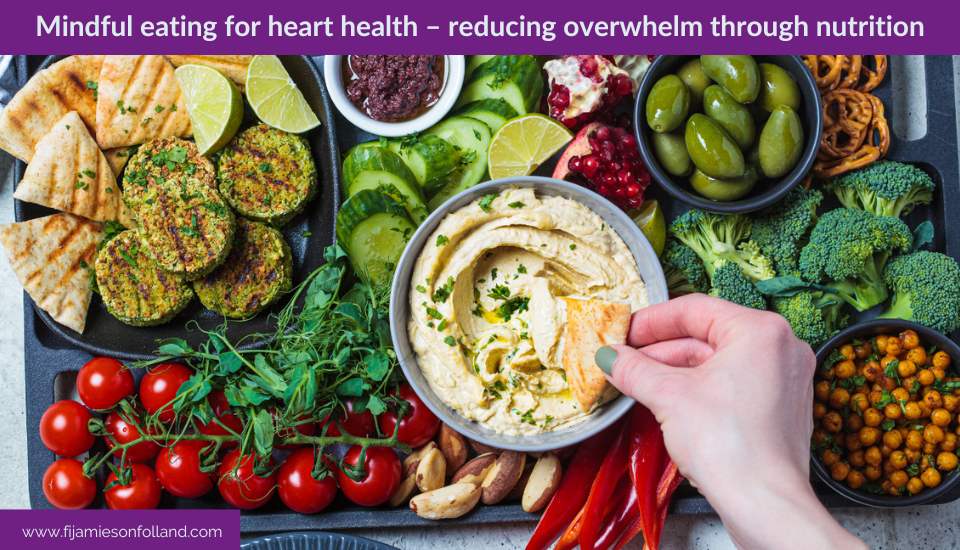
There’s something wonderfully simple about eating, and yet modern life has managed to turn it into something surprisingly complicated.
We’re surrounded by diets, conflicting nutrition advice, food rules, calorie calculations, ‘good’ foods and ‘bad’ foods, superfoods, elimination plans and endless opinions about what we should or shouldn’t be eating, so it’s hardly surprising that many people sit down to a meal already feeling overwhelmed.
Mindful eating offers a different approach.
It isn’t another diet, and it isn’t about achieving perfect nutrition at every meal; it’s about becoming more present with food, noticing what you’re eating and how you’re eating it, and gradually moving away from the feeling that every meal is another health decision you have to get right.
Start by turning down the food noise
One of the most exhausting aspects of modern nutrition is the sheer amount of information coming at us. One day something is considered wonderfully healthy and the next day somebody is telling us to avoid it, and when you’re constantly exposed to contradictory messages, eating can become an intellectual exercise rather than something that can nourish and satisfy you.
Trial giving yourself permission to step away from some of that noise.
Instead of asking whether every ingredient is optimal, begin asking whether the overall pattern of your eating is nourishing, varied and enjoyable. A heart-healthy diet doesn’t need to be perfect at every meal, and one less-than-ideal choice doesn’t undo everything else you are doing well.
Create a calmer eating environment
Mindful eating begins before your first bite. If you’re eating while answering emails, watching television, scrolling through your phone and mentally planning the rest of your day, your attention is somewhere else entirely.\
This makes it much harder to notice the experience of eating or recognise when you have had enough.
You don’t need to turn every meal into a meditation session! Perhaps start with creating one calmer meal each day.
Sit down properly, put the phone somewhere out of reach and allow yourself to actually see, smell and taste the food. You may be surprised by how different a meal feels when it isn’t competing with five other sources of stimulation.
Let food become enjoyable again
Heart-healthy eating doesn’t need to feel like punishment. In fact, if every healthy meal feels like something you have to endure, it becomes much harder to sustain those choices over the long term.
Think about flavour, texture, colour and satisfaction rather than simply nutrients. Add herbs and spices, experiment with different vegetables, make a salad genuinely delicious, roast foods until they develop flavour and choose foods you actually look forward to eating. Pleasure is not the enemy of healthy eating; when nutritious food is genuinely enjoyable, healthy choices become much easier to repeat.
Notice the difference between hunger and overwhelm
Sometimes we eat because we’re physically hungry, however sometimes we eat because we’re tired, bored, stressed, lonely or simply overwhelmed by the day. We don’t need to judge ourselves when this happens; emotional eating is part of being human, and attempting to control it through guilt usually creates even more emotional pressure.
Instead, become curious. Before automatically reaching for something, pause for a moment and ask yourself what you actually need. Perhaps you’re hungry and need food, perhaps you need a break, perhaps you need connection, or perhaps you’re simply exhausted. There is no wrong answer, however recognising the difference gives you more choice.
Make healthy choices easier
Mindful eating isn’t only about what happens while you’re sitting at the table. It’s also about designing your environment so that you don’t have to make hundreds of nutritional decisions every day.
Keep nourishing foods visible and convenient, prepare a few ingredients in advance, have simple meals you know you enjoy and make healthy options the easy options when you’re tired. This reduces nutritional decision fatigue, because the less mental energy you spend deciding what to eat, the more energy you have for actually living your life.
Slow down without turning eating into homework
There’s a tendency to take healthy ideas and turn them into another performance goal. Mindful eating doesn’t have to become something else you feel you are failing at.
You don’t need to chew every mouthful a certain number of times or spend twenty minutes analysing your hunger signals. Simply slowing down enough to notice your food can make a difference. 1
Put your fork down occasionally, take a breath, have a conversation, taste what you are eating and allow the meal to unfold rather than treating it as something you need to finish as quickly as possible.
The goal isn’t perfect mindfulness.
It’s simply being a little more present than you were before.
Give yourself permission to eat imperfectly
One of the most liberating ideas in heart-healthy nutrition is that your overall pattern matters much more than any individual meal. If you eat a beautifully balanced meal one day and have fish and chips with friends the next, you haven’t suddenly moved from ‘healthy’ to ‘unhealthy’.
This is where mindful eating can help reduce overwhelm, because it takes away the idea that every food choice has to be judged.
Enjoy the birthday cake.
Savour the meal out.
Eat the food your family prepared.
Then return to the foods that nourish you at your next meal without guilt or compensation.
There’s tremendous freedom in knowing that you don’t have to be perfect to be healthy.
Build your own rhythm around food
Rather than following somebody else’s ideal eating schedule, pay attention to what makes you feel energised, satisfied and comfortable. Some people thrive on a predictable rhythm of meals, while others naturally prefer a little more flexibility, and your needs may change depending on your activity, sleep and daily demands.
What matters is developing a pattern that feels sustainable rather than constantly fighting yourself. Your heart doesn’t need you to obsess over every meal; it benefits from the cumulative effect of thousands of ordinary choices made over months and years.
Let nutrition support your life, not dominate it
Perhaps the greatest gift of mindful eating is that it can help move nutrition back into its proper place. Food matters enormously, however it’s there to nourish your body, give you energy, bring people together and provide pleasure, not to occupy your thoughts from morning until night.
So the next time you sit down to eat, take a breath and look at your plate. Notice the colours, the aroma and the texture. Ask yourself what your body might need, enjoy the food in front of you and give yourself permission to stop attempting to make the perfect choice.
Heart-healthy nutrition doesn’t need to create more overwhelm.
It can actually become one of the ways you reduce it.
See you on this week’s #AlivewithFi 🙂
Fi Jamieson-Folland D.O., I.N.H.C., is The LifeStyle Aligner. She’s an experienced practitioner since 1992 in Europe, Asia and New Zealand as a qualified Osteopath, Integrative Nutrition Health Coach, speaker, educator, writer, certified raw vegan gluten-free chef, and Health Brand Ambassador.

Facebook Instagram LinkedIn Pinterest YouTube
1 A systematic review and meta-analysis examining the effect of eating rate on energy intake and hunger – https -//pubmed.ncbi.nlm.nih.gov/24847856/