
As a healthy-heart coach, my passion is to empower those of us who are ready, to live vibrant, heart-strong lives.
I invite you to join me dive deep into why managing stress isn’t just a nice-to-have, it’s a non-negotiable for keeping your heart healthy and preventing heart disease, (which, according to the CDC, American Heart Association and the NZ Ministrial of Health is the number one killer of women.)
Stress is more than that frazzled feeling when your to-do list is a mile long—it’s a powerful force that can silently chip away at your cardiovascular system, especially for those of us who are women.
Let’s address how to protect your heart by mastering stress in ways that feel authentic, doable, and oh-so-good.
How stress sneaks into your heart
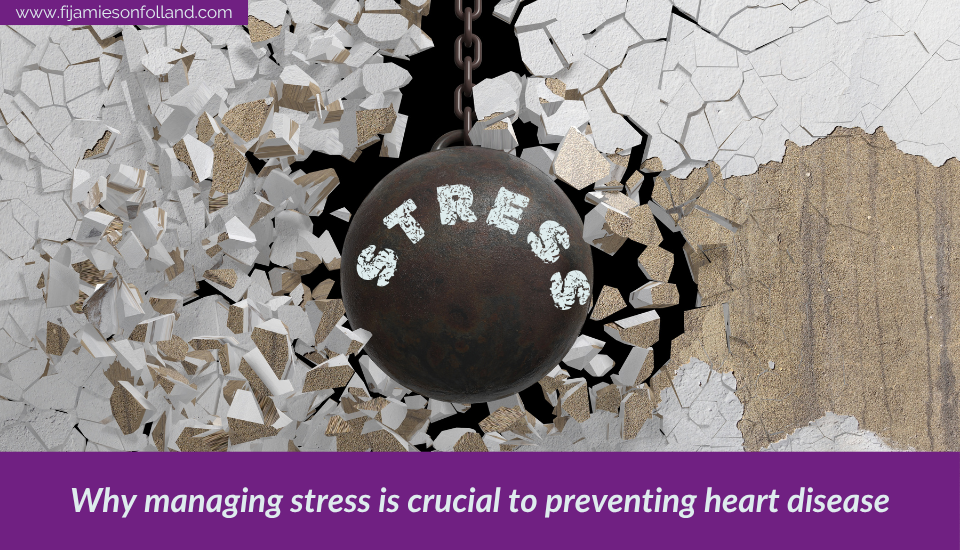
Stress isn’t just a mental burden—it’s a physical one that can be a wrecking-ball for your heart in ways you might not even notice until it’s serious. When you’re stressed, whether it’s from a work deadline, a family drama, or just the constant ‘weight’ of being on the go, your body flips into fight-or-flight mode, releasing a flood of hormones like cortisol, vasopressin and adrenaline that get your heart pumping faster, spike your blood pressure, and tighten your blood vessels.
Yes – it is an intense as it sounds.
Over time, this chronic stress response can do some serious damage – it fuels inflammation that roughens your arteries, promotes the deposit of plaques that can lead to heart attacks, and interupts your heart’s rhythm, setting the stage for conditions like atrial fibrillation. A 2021 study in Circulation found that chronic stress increases the risk of coronary heart disease by 22% in women, and that’s no small thing.
However here’s where it gets personal for those of us who are women – our hearts respond to stress differently. Our hormones, like oestrogen, offer some protection before menopause, however as those levels drop, stress can have more of an impact, making our blood vessels more sensitive to constriction and our hearts more prone to damage.
Plus, women are more likely to face emotional stressors—like care giving, approach to relationship challenges, or societal pressures to be ‘perfect’—which can amplify the impact. A 2022 Journal of the American Heart Association study showed that women with high stress levels had a 30% higher risk of cardiovascular events compared to men under similar stress. Add in the fact that women have been known to put others’ needs first, and it’s clear why stress is a heartbreaker women are wise to heed.
The unique ways stress hits our hearts
Let’s dig into the science of how stress messes with the heart, 1 especially for those who are women, because knowing the ‘why’ c an be empowering for adjusting that risk factor.
Here’s how chronic stress isn’t helpful for the cardiovascular system –
• Inflammation surge – Stress keeps cortisol levels high, which triggers inflammation in your blood vessels, like a slow burn that damages the delicate lining and makes it easier for cholesterol to stick, and form plaques that can block arteries. A 2020 Nature Reviews Cardiology study linked chronic stress to elevated C-reactive protein, a marker of inflammation tied to heart disease, and women are more susceptible due to hormonal fluctuations.
• Blood sugar and insulin chaos – Stress can spike blood sugar by prompting your body to release glucose for quick energy, however over time, this can lead to insulin resistance, a precursor to diabetes—a major heart disease risk factor. Women with stress-related insulin issues face a 25% higher risk of heart events, per a 2021 Diabetes Care study.
• Vascular stiffness – Chronic stress makes your blood vessels less flexible, which raises blood pressure and strains your heart. Post-menopausal women are especially vulnerable, as oestrogen’s protective effect fades, according to a 2023 Hypertension journal report.
• Clotting risks – Stress hormones can make your blood ‘stickier’, increasing the chance of clots that can block arteries and cause heart attacks or strokes. Women are more prone to stress-induced clotting changes, especially under emotional stress, per a 2022 Thrombosis Research study.
• Sleep disruption – Stress often steals your sleep, and poor sleep is a heart health killer. A 2021 Sleep Medicine study found that women with stress-related sleep issues had a 20% higher risk of heart disease, as lack of rest disrupts heart rate variability and blood pressure regulation.
These effects pile up, and because women’s symptoms of heart trouble—like fatigue or jaw pain—can be subtle, stress-related damage can go unnoticed until it’s serious.
However here’s the good news – you have the power to break this cycle with strategies that are designed to fit into your life.
A new approach to stress management for your heart
So what are some steps to manage stress in ways that protect your heart and feel do-able?
Check out these strategies that are science-backed, practical, and designed to lower stress, reduce heart disease risk, and make you feel empowered and alive.
Ready? Let’s do it…
Curate a sensory stress reset
Your senses—sight, sound, smell, touch, taste—can be powerful allies in calming your nervous system and protecting your heart. Create a daily ‘sensory reset’ by engaging one sense in a deliberate, soothing way. For example, light a scented candle with a calming aroma like sandalwood, listen to nature sounds like ocean waves for 5 minutes, or wrap yourself in a soft, weighted blanket for a cozy hug.
A 2023 Journal of Psychophysiology study found that sensory-based interventions reduced cortisol by 15% and improved heart rate variability, a key marker of heart health.
Top Tip – Trial a different sense each day to keep it fresh, and notice how your heart feels lighter.
Practice intuitive movement
Instead of forcing yourself into a rigid exercise routine, trial intuitive movement—choosing activities that feel good to your body and soul. This could be a gentle yoga flow, a spontaneous dance party in your living room, or a slow walk in a park where you focus on the crunch of leaves underfoot. The key is listening to what your body craves, not what you ‘should’ do. A 2022 American Journal of Preventive Medicine study showed that intuitive, enjoyable movement lowered stress-related blood pressure by 12% in women. Top Tip – Aim for 20–30 minutes on a few days a week to start with, letting your heart guide the pace.
Nourish with heart-protective spices
Your kitchen is a stress-busting, heart-saving treasure trove, and I’m not just talking about fruits and veggies. Add spices like turmeric, cinnamon, and ginger to your meals for their anti-inflammatory and stress-reducing powers. Turmeric, with its active compound curcumin, reduces arterial inflammation, per a 2021 Nutrients study, while cinnamon stabilises blood sugar, and ginger soothes the nervous system.
Top Tip – Trial a turmeric coconut latte, sprinkle cinnamon on your chia porridge, or add freshly choppd ginger to a stir-fry. These small additions can lower stress markers and protect your heart without feeling like a diet overhaul.
Create a ‘heart pause’ ritual
Life moves fast, so build a daily ‘heart pause’ to slow down and check in with yourself. This is a 3–5-minute ritual where you stop, place a hand over your heart, and ask, ‘How am I feeling right now?’
Then, do one small act to honour your heart—like sipping water, stretching, or taking a 5min walk outside to smell fresh air. A 2023 Health Psychology study found that brief, intentional pauses reduced stress hormones by 10% and supported healthy blood pressure.
Top Tip – Make it your own—maybe light a candle or play a favourite song during your pause.
Engage in creative expression
Creativity is a stress-buster that’s often overlooked, however it can be a game-changer for your heart. Trial painting, knitting, writing poetrial, or even colouring in an adult colouring book—anything that lets you express yourself without judgment. A 2020 Arts & Health study showed that creative activities lowered cortisol and improved cardiovascular function in women by 14%.
Top Tip – Set aside 10–15 minutes a few times a week to create something just for you, and watch how it calms your mind and soothes your heart.
Use temperature therapy
Hot and cold therapy can reset your stress response and support your heart. Trial a warm bath with epsom salts to relax your muscles and lower blood pressure, or splash cold water on your face to activate the ‘dive reflex,’ which slows your heart rate and calms your nervous system. A 2022 Journal of Physiology study found that alternating hot and cold exposure reduced stress-related inflammation by 13%.
Top Tip – Start with a warm shower followed by a 30-second cold rinse, or keep it simple with a warm tea and a cool face cloth on your most intensely-paced days.
Build a heart-centred morning routine
How you start your day sets the tone for your stress levels and heart health. Create a 10-minute morning routine that’s all about nurturing your heart. Trial a mix of gentle stretching, a quick affirmation (eg ‘my heart is calm and strong’), and a moment to savour a heart-healthy breakfast, like pre-soaked chia seeds with berries and a sprinkle of activated sunflower seeds. A 2021 Journal of Behavioral Medicine study showed that structured morning routines lowered stress and improved heart rate variability in women.
Top Tip – Make it personal—maybe add a favourite podcast or a moment to pet your dog —and let it anchor you for the day.
Foster micro-connections
While deep relationships are amazing; small, meaningful interactions can also reduce stress and protect your heart. Smile at a stranger, chat with your barista, or send a heartfelt, quick text to a friend. These ‘micro-connections’ release oxytocin, a hormone that counters stress and supports heart health, per a 2023 Social Science & Medicine study.
Top Tip – Aim for 2–3 micro-connections daily—they’re quick, uplifting, and remind you that you’re part of a bigger world.
Your heart-healthy action plan
Ready to put this into action?
Here’s a simple, week-long plan to integrate these strategies into your life in a do-able way –
• Day 1 – Start a sensory reset—light a no-chemicals-added scented candle and savour its aroma for 5 minutes after a long day.
• Day 2 – Trial intuitive movement—go for a 20-minute walk or dance to a song that has you feel happy.
• Day 3 – Add a heart-protective spice to one meal, like turmeric in a soup or cinnamon in your smoothie.
Day 4 – Enjoy a 5-minute heart pause ritual—hand on heart, realise and accept your strength, and sip water mindfully.
• Day 5 – Invest 10 minutes on a creative activity, like doodling or knitting, to unwind and de-stress.
• Day 6 – Trial temperature therapy—a warm bath followed by a cool face splash to reset your system.
• Day 7 – Build a heart-centred morning routine with stretching, an deep-breath pause, and a health-filled breakfast.
You might want to cycle through these practices, tweaking them to fit your energy on the day. Check in with your primary health care practitioner if you have heart disease risk factors (like high blood pressure or diabetes) to ensure your plan is appropriate for you.
You’re the guardian of your heart
Stress is an inevitable part of life for many of us, however it doesn’t have to define your heart’s future. Many of us can end up facing a variety of challenges—hormonal shifts, emotional stressors, and the pressure to do it all—however we also have incredible resilience and power to protect our hearts. By embracing sensory resets, intuitive movement, heart-protective spices, heart pauses, creative expression, temperature therapy, morning routines, and micro-connections, you’re not just managing stress—you’re building a heart-strong life that radiates strength and joy.
Your heart is the core of everything you love and dream about, so perhaps it’s time to give yours the care it deserves.
See you on this week’s #AlivewithFi 🙂
1 This stress-reduction trial for women with chronic heart disease, shows a lower death rate over 7 years
https -//pubmed.ncbi.nlm.nih.gov/20031809/
Fi Jamieson-Folland D.O., I.N.H.C., is The LifeStyle Aligner. She’s an experienced practitioner since 1992 in Europe, Asia and New Zealand as a qualified Osteopath, Integrative Nutrition Health Coach, speaker, educator, writer, certified raw vegan gluten-free chef, and Health Brand Ambassador.