
When we think about protecting our heart, many of us immediately focus on cholesterol numbers, blood pressure readings, exercise routines or what foods we need to remove from our diet.
These are certainly important pieces of the cardiovascular health puzzle, however preventive cardiology is evolving into something much broader. It is increasingly about creating an internal environment where the heart, blood vessels, nervous system and metabolism can function at their best long before problems develop.
One of the most powerful areas of focus is chronic stress. Unlike short bursts of stress that can help us respond, adapt and perform, chronic stress quietly places the body under continuous pressure. It can influence sleep, digestion, immune function, inflammation, blood sugar regulation, emotional wellbeing and the delicate balance of the nervous system that communicates constantly with the heart.
The encouraging news is that the body has an extraordinary ability to adapt when given the right support. Natural approaches to stress management are not about chasing perfection or attempting to create a completely stress-free existence, because life will always bring challenges. Instead, they’re about strengthening resilience, improving recovery and creating daily conditions where the heart feels supported rather than constantly under demand.
Preventive cardiology asks a powerful question ‘what can we do today to help the body remain strong tomorrow?’
When we approach heart health through this lens, managing chronic stress becomes one of the most valuable investments we can make.
Understanding chronic stress and the heart
Stress itself is not the enemy.
In fact, stress is a natural biological response that has helped humans survive for thousands of years. When we face a challenge, the body becomes more alert, energy becomes available and our ability to respond improves. This short-term activation is part of being healthy.
The issue begins when the stress response remains switched on for too long without adequate recovery. Modern life can create a situation where the body is repeatedly exposed to signals of urgency, whether that comes from work pressure, financial concerns, relationship challenges, poor sleep, constant digital stimulation or the feeling that there is never enough time.
The heart is deeply connected to this stress response because it is influenced by the nervous system, hormones and inflammatory pathways throughout the body. When the body spends too much time in a state of alertness, it may struggle to shift into the restorative state where repair, regeneration and balance occur.
This is why preventive cardiology places such importance on stress resilience. It is not simply about reducing stress levels; it is about helping the body become better equipped to handle the inevitable pressures of life.
A resilient heart is supported by a resilient person.
Building cardiovascular resilience before problems appear
One of the most empowering concepts in preventive health is the idea of building a health reserve. Rather than waiting until symptoms appear, we can gradually strengthen the systems that protect us.
Think about cardiovascular resilience like preparing for a long journey. You would not wait until your vehicle breaks down before checking the engine, filling the fuel tank and ensuring everything is working properly. Your body deserves the same proactive attention.
Every day provides opportunities to strengthen this reserve. The quality of your sleep, the food choices you make, the way you move, the relationships you nurture and the way you manage emotional stress all contribute to the environment your heart experiences.
This approach removes the pressure of seeking one perfect solution. Heart health is not created by one isolated habit; it is created by thousands of small choices repeated over time.
A morning walk, a nourishing meal, a few minutes of mindful breathing or an evening spent connecting with loved ones may appear simple, however these moments become powerful when they form part of a consistent lifestyle.
Supporting the nervous system naturally
The nervous system is one of the most important regulators of cardiovascular health because it constantly communicates with the heart. It influences heart rate, blood pressure, breathing patterns and the body’s ability to recover after stress.
Many people focus on calming the mind although forget that the body also needs physical signals of safety. The nervous system responds to experiences, not just thoughts. This means that simple daily practices can become powerful tools for creating balance.
One of the most effective approaches is developing regular moments of downshifting throughout the day. Rather than waiting until exhaustion forces us to stop, we can intentionally create small periods where the body is allowed to recover.
This might involve stepping outside for fresh air, practising slow breathing before meals, spending time in natural surroundings or creating a quiet transition between work and home life. These moments may seem small, yet they remind the nervous system that it does not need to remain permanently prepared for action.
The goal is not to eliminate activation as we need energy, focus and motivation. The goal is to create flexibility so the body can move smoothly between activity and restoration.
The role of breathing in heart protection
Breathing is one of the most accessible natural tools for influencing stress because it connects conscious awareness with automatic body processes. While we cannot directly control every heartbeat or digestive process, we can influence our breathing patterns, and breathing patterns send powerful signals throughout the body.
During periods of stress, breathing often becomes quicker and more shallow. This is a normal response, however when it becomes our everyday pattern, it can reinforce feelings of tension and urgency.
Learning to breathe more slowly and intentionally can help create a different message within the body. A longer, calmer exhalation encourages the nervous system to move towards a more restorative state, allowing the heart and body to experience greater balance.
A simple practice is to take a few moments each day to notice your breathing without judgement. Feel the air moving in and out, relax the shoulders and allow the breath to gradually become smoother.
This practice is not about achieving a perfect meditation state. It’s about creating a small daily opportunity for the body to remember what calm feels like.
Nourishing the heart through stress-supportive nutrition
The relationship between nutrition and stress resilience is often underestimated. The foods we consume provide the raw materials needed for energy production, cellular repair, immune balance and nervous system function.
A heart-supportive eating pattern is not about restriction – instead it’s about abundance and nourishment. Colourful vegetables, quality proteins, healthy fats, herbs, spices, nuts, seeds and naturally fibre-rich foods provide a wide range of nutrients that support the body’s ability to adapt.
Chronic stress can increase the body’s demand for certain nutrients because the systems involved in energy production and recovery are working harder. This is why a nutrient-dense diet can be viewed as a form of daily preparation, helping the body maintain strength during challenging periods.
Another important consideration is blood sugar balance. Many people experience increased cravings, energy crashes and mood changes when their meals create significant fluctuations in energy. These changes can make stressful situations feel even more difficult to manage.1
Creating meals that provide steady nourishment helps create a more stable internal environment, supporting not only the heart – also the brain and nervous system.
The gut-heart connection and stress resilience
The gut has become one of the most fascinating areas of modern health research because we now understand that digestion is far more connected to overall wellbeing than previously recognised. The gut communicates constantly with the brain, immune system and cardiovascular system through multiple pathways.
Chronic stress can influence digestive function, while digestive imbalance can affect how the body responds to stress. This creates a two-way relationship where supporting one system can positively influence the other.
Simple habits often have the greatest impact. Eating slowly, including a wide variety of plant foods, staying hydrated and creating a calmer environment around meals can all support better communication between the gut and the rest of the body.
A healthy gut environment contributes to a healthier internal ecosystem, and that ecosystem plays a role in how resilient we feel physically and emotionally.
The heart does not exist in isolation. It is part of a remarkable network where every system influences another.
Strengthening cellular resilience through lifestyle choices
When we discuss heart health, we often focus on the larger picture of exercise, nutrition and stress reduction, although beneath the surface there is an extraordinary world of cellular activity that influences how well our bodies cope with everyday demands. Every cell in the body requires energy to function, repair and communicate effectively, and chronic stress can place additional demands on these energy systems.
The heart is particularly dependent on healthy cellular energy because it works continuously from the moment we are born until the end of our lives. Supporting the body’s ability to produce and use energy efficiently is therefore an important part of preventive cardiology.
Lifestyle habits that support cellular resilience are often the same habits that support overall wellbeing. Regular movement, restorative sleep, nutrient-rich foods, time outdoors and emotional balance all contribute to creating a healthier internal environment.
This is an important reminder that heart health is not built only through occasional intense efforts. It’s shaped by the everyday signals we send our body. A consistent pattern of supportive choices helps create a foundation where the heart can perform its vital role more efficiently.
Movement as medicine for stress recovery
Movement is one of the most powerful natural tools available for supporting both cardiovascular health and stress resilience. However, the purpose of movement extends far beyond burning calories or improving fitness. At its deepest level, movement helps the body process stress, regulate emotions and reconnect with a sense of vitality.
When we move, we improve circulation, support healthy metabolism and encourage the release of natural compounds that influence mood and wellbeing. Physical activity also provides an opportunity to shift attention away from repetitive thoughts and reconnect with the body.
The key is choosing movement that supports your whole system rather than adding another source of pressure. For someone already carrying a heavy stress load, gentle walking, mobility exercises, strength training, swimming or enjoyable recreational activities may provide more benefit than constantly pushing to exhaustion.
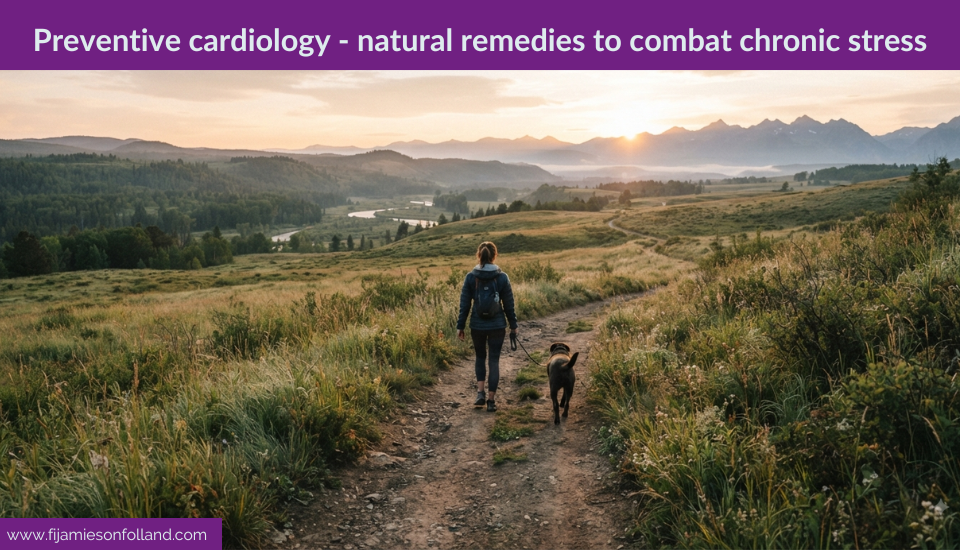
There is also something powerful about moving outdoors. Walking in natural environments combines physical activity with the calming influence of nature, providing a double benefit for the nervous system and heart.
The best exercise routine is not necessarily the most extreme one. It is the one that becomes a sustainable part of your life because it leaves you feeling stronger, more energised and more connected to yourself.
Sleep as the foundation of cardiovascular repair
Sleep is one of nature’s most powerful recovery tools, yet it is often sacrificed when life becomes demanding. Many people attempt to manage stress by doing more, working longer and pushing harder, while overlooking the fact that the body requires periods of deep restoration to function well.
During quality sleep, the body carries out essential processes that support cardiovascular health. The nervous system recalibrates, the brain processes emotional experiences, tissues repair and energy reserves are restored.
When sleep becomes disrupted, everything can feel harder. Small challenges may seem more overwhelming, emotional reactions can become stronger and the body may struggle to recover from daily stress.
Supporting sleep does not require complicated strategies. Often, it begins with respecting the body’s natural rhythms, including consistent sleep and wake times, exposure to natural light during the day, reducing stimulating activities in the evening and creating a calming bedtime environment, which can all help signal that it is time to restore.
Sleep is not time lost – it’s time invested in the future health of your heart.
Nature as a natural stress regulator
There is a reason so many people instinctively feel calmer near the ocean, in forests or surrounded by green spaces. Human beings evolved within natural environments, yet modern lifestyles often separate us from the rhythms that once supported our wellbeing.
Nature provides a different kind of stimulation from the constant alerts, screens and demands of modern life. The sounds of birds, movement of trees, natural light and open spaces create sensory experiences that encourage the nervous system to soften.
Spending time in nature can become a form of active recovery. It allows the mind to rest while the body receives signals of calm. Even short periods outside can provide a meaningful reset, especially when we approach them mindfully.
A walk does not have to become another productivity goal. It can simply be a chance to notice the world around you, feel the ground beneath your feet and allow your attention to move away from constant mental activity.
These moments of connection with nature are not insignificant. They are reminders that health is supported not only by what we achieve, it’s also supported by how we experience life.
Emotional regulation and the prevention of stress overload
One of the most overlooked aspects of preventive cardiology is emotional health. Many people are excellent at caring for their physical body while carrying years of unresolved stress, emotional tension or internal pressure.
Emotions themselves are not harmful. They’re valuable signals that provide information about our experiences, needs and values. The challenge comes when emotions become suppressed, ignored or continuously activated without healthy ways to process them.
Learning emotional regulation is not about controlling every feeling. It’s about developing the ability to experience emotions without being completely overwhelmed by them.
Practices such as journaling, mindfulness, talking with trusted people, spending quiet time reflecting and engaging in creative activities can provide healthy outlets for emotional processing.
The heart responds to the environment we create within ourselves. A life filled with constant internal conflict places different demands on the body compared with a life where emotions are acknowledged and supported.
Creating emotional balance is therefore not separate from heart health – it’s part of it.
The importance of purpose and meaning
A fascinating aspect of long-term wellbeing is the role of purpose. People who feel connected to meaningful goals, relationships and activities often demonstrate greater resilience when facing life’s challenges.
Purpose does not need to involve something dramatic or extraordinary. It may come from caring for family, contributing to a community, creating something meaningful, helping others or simply appreciating the everyday moments that make life fulfilling.
When we have a sense of purpose, stress is often experienced differently. Challenges may still exist, however they’re placed within a larger context. Instead of feeling like every difficulty is overwhelming, we have a reason to keep moving forward.
For heart health, this matters because emotional wellbeing influences the behaviours that shape our lifestyle. When people feel connected and purposeful, they are often more motivated to care for themselves.
Preventive cardiology is not only about preventing disease. It is about creating a life that supports vitality.
Creating a personal stress resilience plan
One of the most effective ways to combat chronic stress is to move away from random attempts at self-care and create intentional daily practices. A personal resilience plan does not need to be complicated. It simply needs to reflect what genuinely supports your body, mind and lifestyle.
For one person, this may involve morning movement and time outdoors. For another, it may mean prioritising sleep, preparing nourishing meals or creating more meaningful social connection. There is no single formula because every person’s stress patterns and needs are different.
The most important factor is consistency. Small actions repeated regularly create powerful biological messages.
A few minutes of breathing each morning, a daily walk, choosing foods that nourish rather than deplete, making time for relationships and protecting moments of rest all contribute to a stronger foundation.
The heart benefits from the accumulation of these choices, and health is created in ordinary moments, not only through major decisions.
Creating a heart-centred approach to modern living
One of the greatest shifts in preventive cardiology is moving away from seeing health as something we only address when something goes wrong. A truly preventative approach asks how we can create the conditions where the body is supported, resilient and better prepared to handle the challenges of life.
Chronic stress is one of the clearest examples of why this approach matters. Stress is not always something we can remove from our lives, although we can influence how we respond to it and how quickly we recover afterwards. The difference between being overwhelmed by stress and adapting to stress often comes down to the foundations we build every day.
This is why natural stress-supportive strategies are so powerful. They do not focus on fighting the body or forcing change. They work with the body’s own intelligence by creating the right environment for balance.
A nourishing meal, a restful night of sleep, a walk outside, a meaningful conversation, a few moments of conscious breathing or simply taking time to appreciate life may appear small, however these actions create repeated messages of safety and support throughout the body.
Over time, these messages influence the way we function. They shape our energy, our emotional resilience, our ability to recover and the overall environment in which the heart operates.
The power of gratitude and positive emotional states
While chronic stress can place significant demands on the body, positive emotional states can provide valuable moments of restoration. Gratitude, appreciation, kindness and connection are not simply pleasant experiences; they can influence the way we perceive and respond to life.
Gratitude is particularly powerful because it changes our attention. The human brain naturally looks for problems and potential threats, which is useful for survival – yet can become exhausting when it dominates our daily experience. A gratitude practice gently trains the mind to also recognise what is working, what is meaningful and what brings joy.
This does not mean ignoring difficulties or pretending challenges do not exist. It means creating a more balanced perspective where challenges and appreciation can exist together.
A simple practice might involve reflecting each evening on three things that went well, something you appreciated or a moment that brought a sense of connection. Over time, this can become a powerful reminder that life contains moments of beauty even during difficult seasons.
The heart is influenced not only by what we experience, it’s also affected by the emotional environment in which we live.
Protecting your attention in a constantly connected world
One of the modern contributors to chronic stress is the constant demand placed on our attention. Notifications, messages, emails and endless streams of information create a situation where the brain rarely receives true periods of rest.
Attention is a valuable health resource. Where we place our attention influences our emotional state, our energy and our ability to be present.
Creating intentional boundaries around technology can therefore become a form of preventive cardiology. This might mean beginning the morning without immediately checking a device, enjoying meals without distractions or creating a period before bed where the mind can naturally slow down.
The purpose is not to reject technology, which provides many benefits – rather it’s to create balance. The nervous system needs moments where it is not constantly processing new information.
When we protect our attention, we create more space for awareness, connection and recovery.
Building a lifestyle that supports longevity
Long-term heart health is created through a relationship with ourselves that values consistency over perfection. Many people become discouraged because they believe they need to completely transform their lifestyle overnight, however sustainable change rarely works that way.
The body responds beautifully to small improvements repeated over time. Adding more movement, improving sleep habits, eating more nourishing foods, managing stress more effectively and creating meaningful relationships all contribute to a stronger foundation.
Preventive cardiology is ultimately about increasing the years of healthy living we experience, not simply adding years to life. It is about having the energy to participate fully, connect deeply and enjoy the experiences that make life meaningful.
The heart is constantly adapting to the environment we create for it. Every supportive choice is an opportunity to influence that environment.
A natural roadmap for protecting your heart from chronic stress
If we were to simplify the principles of natural stress management for heart health, they would come back to a few powerful foundations – nourish the body, calm the nervous system, move regularly, sleep deeply, connect meaningfully and create moments of recovery.
These are not quick fixes.
They are lifestyle practices that work together over time.
The beauty of this approach is that it allows everyone to begin where they are. You do not need to wait until everything is perfect.
You can start with one small change today.
Perhaps it is taking a mindful walk.
Or preparing a more nourishing meal.
Maybe it’s creating a few quiet moments in the morning before the demands of the day begin.
Each choice is a vote for the kind of health you want to create.
A strong heart is not built in one moment – it’s built through thousands of moments in which we choose to care for ourselves.
See you on this week’s #AlivewithFi 😉
Fi Jamieson-Folland D.O., I.N.H.C., is The LifeStyle Aligner. She’s an experienced practitioner since 1992 in Europe, Asia and New Zealand as a qualified Osteopath, Integrative Nutrition Health Coach, speaker, educator, writer, certified raw vegan gluten-free chef, and Health Brand Ambassador.

Facebook Instagram LinkedIn Pinterest YouTube
1 Association of glucose levels and glucose variability with mood in type 1 diabetic patients – PubMed