
There was a time when most people thought heart disease appeared suddenly, almost like a lightning strike out of nowhere, however the more years I have been blessed to work with people struggling with exhaustion, inflammation, unstable blood sugar, abdominal weight gain, high stress, poor sleep, and declining energy, the more convinced I have become that heart disease is a metabolic story that often whispers long before it screams.
Our bodies give metabolic clues long before a diagnosis arrives. Sometimes it begins with constant fatigue that no amount of caffeine seems to fix.
Others it shows up as stubborn belly fat despite eating ‘reasonably well.’
It can manifest as intense sugar cravings, afternoon crashes, brain fog, poor sleep, elevated blood pressure, or the unsettling feeling that the body is aging faster than it should.
While many of us might separate these symptoms into different categories, the reality is that they are often deeply connected through something that affects nearly every aspect of cardiovascular wellness – metabolic health.
Metabolic health is not simply about weight, nor is it just about avoiding sugar or counting calories. It is about how efficiently the body creates energy, regulates blood sugar, manages inflammation, balances hormones, responds to stress, and protects the cardiovascular system from ongoing strain over time. When metabolic health begins to decline, the heart often feels the consequences eventually.
The encouraging part is that our bodies are remarkably responsive when given the right environment. Small, consistent dietary and lifestyle shifts can create profound changes in energy, inflammation, blood sugar regulation, and cardiovascular resilience. Not through deprivation or fear-based eating – instead through nourishment, rhythm, and learning to work with the body instead of constantly fighting against it.
Understanding the connection between metabolic health and heart disease
Most people think heart disease is only about cholesterol, although cardiovascular health is influenced by a much broader picture. Blood sugar instability, chronic inflammation, insulin resistance, oxidative stress, elevated triglycerides, poor sleep, chronic stress, abdominal fat accumulation, and sedentary living all interact together like pieces of a puzzle.
When blood sugar rises sharply over and over again throughout the day, the body is forced into a constant balancing act.
Energy spikes and crashes become normal.
Hunger signals become distorted.
Inflammation may increase.
Over time, this metabolic strain can affect blood vessels, circulation, blood pressure, and the overall workload placed on the cardiovascular system.
One of the biggest misunderstandings in nutrition is the idea that the body responds only to isolated nutrients. In reality, the body responds to patterns. It responds to what we repeatedly do day after day, year after year. That means metabolic health is shaped less by occasional indulgences and far more by the rhythm of everyday living.
Why blood sugar stability matters so much for the heart
One of the most powerful things a person can do for long-term cardiovascular wellness is stabilise blood sugar levels throughout the day. The problem is that modern eating patterns often create the exact opposite effect.
Many people begin the morning with highly processed foods or sugary drinks, rush through lunch, rely on stimulants to overcome fatigue, snack constantly because they are never truly satisfied, and then collapse into heavy evening meals while emotionally exhausted. The body never fully settles into metabolic balance.
When blood sugar swings dramatically, insulin levels tend to follow. Over time, the body may become less sensitive to insulin’s signals, leading to a state often referred to as insulin resistance. This process is closely linked with metabolic dysfunction and increased cardiovascular risk.
One of the simplest ways to support healthier blood sugar balance is surprisingly uncomplicated…
…to simply build meals around protein, fibre, and healthy fats instead of relying heavily on refined carbohydrates alone. Meals that include eggs, fish, nuts, seeds, avocado, legumes, vegetables, olive oil, tofu, beans and fish tend to create more sustained energy and satiety than highly processed foods that digest rapidly and leave people hungry soon afterward.
The goal is not perfection.
It’s steadiness.
The problem with living on ultra-processed foods
Modern food environments make convenience incredibly easy and nourishment surprisingly difficult. Ultra-processed foods are everywhere, engineered at great cost to be hyper-palatable, shelf-stable, and difficult to stop eating. Many people are consuming large amounts of refined starches, sugars, industrial oils, and artificial additives while receiving very little fibre, micronutrients, or real nourishment.
The challenge is not only what these foods contain – it’s what they displace. When highly processed foods dominate the diet, there is often less room for colourful vegetables, healthy fats, mineral-rich foods, quality proteins, herbs, legumes, nuts, seeds, and deeply nourishing whole foods that support metabolic resilience.
It can be helpful to stop obsessing over restriction and instead ask a different question – ‘how can I add more nourishment?’
This subtle shift changes everything psychologically. Instead of approaching food from fear, guilt, or punishment, people begin approaching it from care and abundance. Suddenly meals become less about deprivation and more about building a body that feels energised, steady, and supported.
Fibre – the quiet hero of metabolic wellness
Fibre rarely gets the glamour that trendy diets receive, although metabolically speaking it is one of the most powerful nutritional tools available. Fibre supports satiety, digestion, blood sugar balance, gut health, and cardiovascular wellness all at once. Yet many people consume far less than their bodies truly need because modern diets are dominated by refined and processed foods stripped of their natural fibre content.
Vegetables, berries, legumes, chia seeds, flaxseeds, nuts, and whole plant foods help slow digestion and create a more gradual release of glucose into the bloodstream. This steadier metabolic response helps reduce the rollercoaster effect many people experience after meals.
What fascinates me is how quickly people often notice a difference when fibre intake improves consistently.
Energy becomes steadier.
Cravings reduce.
Digestion improves.
Fullness lasts longer.
Even mood stability can improve because the body is no longer riding extreme peaks and crashes all day long.
Research strongly supports the cardiovascular benefits of higher fibre intake. One widely cited study published in The BMJ titled ‘Dietary fibre intake and risk of cardiovascular disease’ 1 found that higher dietary fibre consumption was associated with a lower risk of cardiovascular disease and coronary heart disease.
Healthy fats are not the enemy
For years many people became terrified of fat, convinced that eating low-fat processed products automatically meant better heart health. Unfortunately, many of those foods were heavily refined, loaded with sugar, and metabolically disruptive in completely different ways.
The body needs healthy fats for hormone production, cell membranes, brain function, nutrient absorption, satiety, and metabolic balance. The key is focusing on quality rather than fear. Foods like extra virgin olive oil, avocado, nuts, seeds, olives, wild-caught fish, and minimally processed natural fat sources like coconut oil can be deeply supportive when incorporated into a balanced dietary pattern.
Healthy fats also help slow digestion and improve meal satisfaction, reducing the constant hunger and snacking cycle many people experience when meals are built almost entirely around refined carbohydrates.
One of the most liberating things people can learn is that nourishing meals ideally leave them feeling satisfied, grounded, and energised rather than constantly deprived.
Why stress eating sabotages metabolic health
One of the biggest metabolic disruptors has nothing to do with nutrients themselves.
It is emotional overwhelm.
People often eat not because they are physically hungry – instead because they are emotionally exhausted, lonely, anxious, over-stimulated, or seeking relief after carrying stress all day (or year) long.
The challenge is that stress itself changes physiology. Cortisol influences blood sugar regulation, appetite, cravings, and fat storage patterns, particularly around the abdomen.
Many of us have assumed we’ve simply lacked willpower, when in reality our nervous system was chronically overloaded. No nutritional strategy works well when the body remains trapped in survival mode.
This is the reason that metabolic health is never only about food. It is also about sleep, stress regulation, emotional wellbeing, nervous system balance, and lifestyle rhythm.
Sometimes the most powerful thing we can do before eating is pause for sixty seconds, breathe deeply, relax our shoulders, and allow our body to transition into a calmer physiological state.
Our body digests differently when it feels safe.
The importance of protein as we age
One of the most overlooked dietary issues, especially for women and older adults, is inadequate protein intake. Protein plays a critical role in maintaining muscle mass, metabolic function, blood sugar balance, satiety, recovery, and healthy aging.
Yet many people eat very little protein early in the day, then wonder why they feel hungry, shaky, fatigued, or prone to cravings later on. A protein-rich breakfast can dramatically improve energy stability for many people.
Instead of beginning the day with highly processed carbohydrates alone, meals built around coconut yoghurt, pre-soaked or activated organic nuts + seeds, smoothies with protein sources, eggs, or savoury whole-food meals often create far greater steadiness throughout the morning.
Muscle tissue itself is metabolically active and incredibly important for long-term health. Supporting muscle through adequate nutrition and movement becomes increasingly important as people age because metabolic decline is not simply about body fat. It is also about losing strength, vitality, and resilience.
Why meal timing matters more than people realise
Our bodies thrive on rhythm.
Eating erratically, grazing continuously late into the evening, or consuming heavy meals right before bed can disrupt metabolic regulation for some people. While there is no single perfect eating schedule for everyone, creating consistency often helps the body function more efficiently.
Many of us notice improvements when we stop eating constantly throughout the day and instead focus on balanced meals that provide genuine nourishment and satiety. Late-night eating can also interfere with sleep quality, digestion, and overnight recovery.
Our bodies ares designed to repair during rest, yet when digestion remains highly active late into the evening, some of us experience disrupted sleep, reflux, or poor morning energy.
Simple consistency matters far more than perfection.
Colourful foods and cardiovascular protection
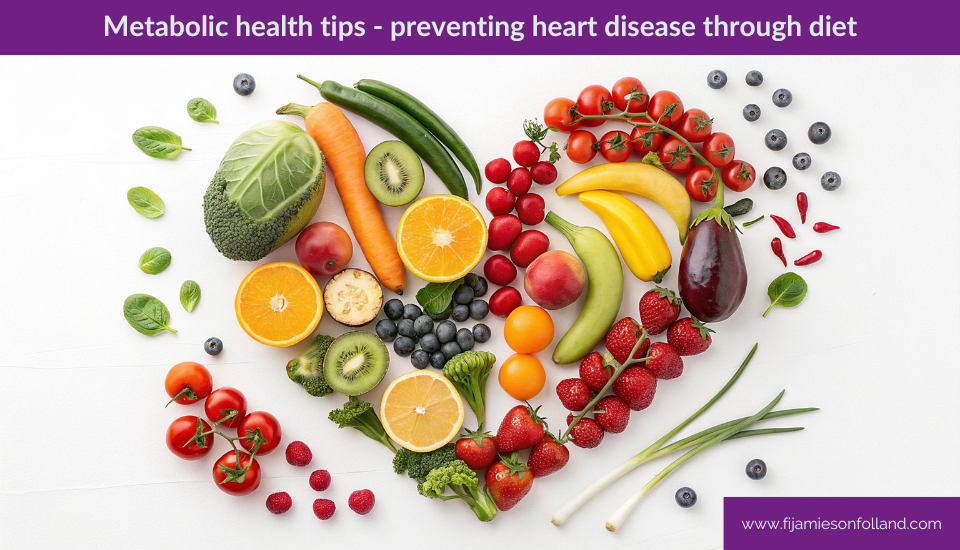
One of my favourite nutritional keys is beautifully simple – eat more colour!
Deeply coloured vegetables, berries, herbs, spices, and plant foods contain a wide range of phytonutrients and antioxidants that help support our bodies against oxidative stress and inflammation.
Bright greens, rich purples, vibrant reds, oranges, yellows, and deep blues all bring different protective compounds to the table. The more diversity we include, the broader the nutritional support they provide our bodies.
The wonderful thing is that colourful meals tend to feel abundant rather than restrictive. A vibrant salad drizzled with olive oil, raw or roasted vegetables with herbs, fresh berries, avocado, activated seeds, and nourishing proteins creates an entirely different experience from the bland ‘diet food’ mentality that leaves people frustrated and deprived.
Food can feel alive.
Nourishment can feel enjoyable rather than punishing.
The gut-heart connection most people overlook
Emerging research continues revealing fascinating connections between gut health and cardiovascular wellness. Our gut microbiome influences inflammation, metabolism, immune function, and even aspects of our cardiovascular risk.
Highly processed diets low in fibre tend to reduce microbial diversity, while fibre-rich whole foods help nourish beneficial gut bacteria. Fermented foods like unsweetened coconut yoghurt, raw kombucha, kefir, sauerkraut, kimchi, and other traditionally prepared foods may also support microbial balance for many people.
What happens in the gut does not stay in the gut. The body functions as an interconnected system, and metabolic health reflects that interconnectedness beautifully.
Hydration and hidden metabolic stress
Many people walk through life mildly dehydrated without realising how much it affects their energy, appetite, concentration, and overall wellbeing. Sometimes what we might interpret as cravings or fatigue is actually inadequate hydration combined with excessive stimulants and highly processed foods.
Water supports circulation, digestion, detoxification pathways, temperature regulation, and countless biochemical reactions throughout the body. Even small improvements in hydration habits can influence how we feel physically and mentally.
One helpful habit is beginning the day with water before immediately reaching for caffeine or sugary drinks. That simple shift alone often changes energy and appetite patterns more than we might expect.
Letting go of all-or-nothing thinking
One of the greatest obstacles to metabolic health is perfectionism.
Many of us often swing between extremes – hyper-restriction followed by burnout, guilt, emotional eating, and frustration. We can end up treating nutrition like punishment instead of partnership.
Our bodies respond far better to consistency than intensity. A nourishing lifestyle is not built through occasional perfection. It’s built through thousands of small decisions repeated over time. Choosing whole foods more often, eating more slowly, sleeping earlier, managing stress more intentionally, moving regularly, drinking enough water, prioritising protein and fibre, cooking more meals at home, and learning how different foods actually make the body feel is where transformation happens.
Not through fear.
Not through obsession.
Not through chasing impossible standards.
Isntead through learning to care for our bodies with steadiness and compassion.
Building metabolic resilience for long-term heart health
Preventing heart disease with diet as one of our tools is not about following trendy rules or becoming fearful of food.
It’s about creating an internal environment where our bodies can function efficiently, inflammation remains lower, blood sugar stays steadier, energy becomes more reliable, and our cardiovascular systems experience less chronic strain over time.
Metabolic health influences nearly everything – mood, sleep, energy, cognitive clarity, weight regulation, inflammation, and cardiovascular resilience. While genetics certainly matter, lifestyle patterns shape far more than many of us realise.
Our daily meals are not just calories.
They are information.
They are signals.
They are messages to our biology about whether our bodies are being nourished or constantly stressed.
The encouraging part is that meaningful change does not require becoming perfect overnight. It simply requires beginning.
One nourishing breakfast.
One balanced meal.
One less processed snack.
One evening meal eaten slowly instead of rushed.
One grocery shop filled with real food instead of convenience products.
Small changes compound over time.
These ordinary daily decisions quietly become the foundation for extraordinary long-term health.
See you on this week’s #AlivewithFi 🙂
Fi Jamieson-Folland D.O., I.N.H.C., is The LifeStyle Aligner. She’s an experienced practitioner since 1992 in Europe, Asia and New Zealand as a qualified Osteopath, Integrative Nutrition Health Coach, speaker, educator, writer, certified raw vegan gluten-free chef, and Health Brand Ambassador.

Facebook Instagram LinkedIn Pinterest YouTube
1 ‘Dietary fibre intake and risk of cardiovascular disease – systematic review and meta-analysis’ – Threapleton DE et al.
https -//www.bmj.com/content/347/bmj.f6879