
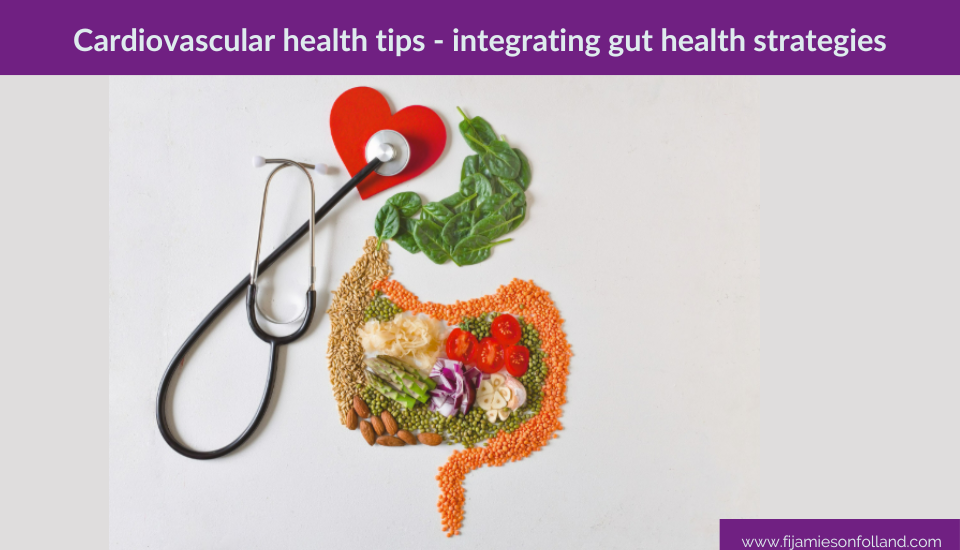
When we talk about protecting the heart, we often focus on what’s happening inside the cardiovascular system, however increasingly we’re discovering that the conversation needs to travel a little further south, because the trillions of microorganisms living throughout our digestive tract are involved in countless processes…including ones that can influence inflammation, metabolism, blood vessels and overall cardiovascular health.
This is often referred to as the gut-heart connection, and while the science is still evolving, it’s becoming increasingly clear that looking after your gut is not simply about having comfortable digestion. It’s about creating an internal environment that supports the many systems that work together to keep your heart healthy.
Think diversity rather than perfection
One of the most useful ways to think about gut health is to stop searching for the one perfect food and instead focus on diversity. Your gut microbiome is an ecosystem, which tend to thrive when they have variety, so rather than eating the same handful of ‘healthy’ foods every day, gradually introducing a broader range of vegetables, fruits, nuts, seeds, legumes, herbs, spices and other plant foods is ideal.
This doesn’t mean you need to completely redesign your diet overnight. In fact, a sudden dramatic increase in fibre can leave some people feeling rather uncomfortable. It works well to start where you are and build gradually, allowing your digestive system time to adapt. Think of it as giving your gut microbes a much more interesting menu rather than attempting to follow another restrictive diet.
Feed your beneficial microbes
Your gut bacteria need nourishment too, and one of their favourite sources is dietary fibre. When certain types of fibre reach the colon, they can be fermented by gut microbes, producing compounds known as short-chain fatty acids, including butryrate, acetate and propionate, which are involved in maintaining the intestinal environment and communicating with other parts of the body.
This is one reason I prefer the phrase ‘feed your microbiome’ rather than simply ‘take something for your gut’. Foods such as onions, garlic, asparagus, leeks, artichokes, legumes, vegetables, berries, nuts, seeds and other fibre-rich plant foods provide different types of fermentable material, so variety matters.
A 2025 systematic review examining dietary patterns in people with cardiovascular disease or cardiovascular risk factors found that plant-rich diets were associated with changes in gut microbiota, including an increase in some potentially beneficial bacteria, and were also associated with reductions in total cholesterol. The researchers concluded that plant-rich dietary patterns may help support cardiovascular health partly through their effects on the gut microbiome. 1
Make your plate colourful
There is a simple visual effect that can make gut-friendly eating much easier – look at the colours on your plate.
Deep green vegetables,
red and purple berries,
orange vegetables,
tomatoes,
herbs,
colourful peppers and other naturally colourful foods…
… contain different plant compounds, including polyphenols, that interact with our gut microbiome.
Rather than becoming obsessed with individual nutrients, think about creating a weekly rotation of different plant foods. You might have berries and seeds one morning, a large salad with herbs and legumes at lunch, roasted vegetables with dinner, and then change the ingredients the following day.
Your gut doesn’t need perfection – simply variety over time.
Remember the fermented-food conversation!
Fermented foods can be another interesting addition to a heart-conscious eating pattern because some contain live microorganisms or fermentation-derived compounds. Depending on your tolerance and dietary preferences, foods such as unsweetened yoghurt alternatives containing live cultures, kefir, sauerkraut, kimchi or other traditionally fermented vegetables can add another dimension to your diet.
The important word here is ‘addition’. Fermented foods won’t replace the fundamentals of a nutrient-rich diet, and more isn’t automatically better. If a particular fermented food leaves you feeling bloated or uncomfortable, there is no prize for forcing yourself to eat it simply because somebody on social media declared it essential.
Your digestive system is individual, and learning what works for you is part of good gut care.
Give your digestion some rhythm
Gut health isn’t only about what you eat; it’s also about the environment in which digestion takes place. Eating while rushing, working, driving or scrolling through your phone can make meals feel like another task to complete rather than an opportunity to slow down.
Attempt occasionally putting your phone aside, sitting down properly and allowing yourself to eat at a calmer pace. Chew thoroughly, notice the food and give yourself a little time before immediately rushing on to the next thing.
This may sound almost too simple to count as a health strategy, although creating a calmer eating environment can encourage greater awareness of hunger, fullness and digestive comfort, which can ultimately make healthy eating feel much less complicated.
Be careful with the ‘gut health’ industry
There is a growing temptation to believe that every digestive symptom means your microbiome is damaged and that every problem can be solved by buying another powder, capsule or cleanse.
It’s worth pausing here.
The science of the gut microbiome is fascinating, however it’s also complex, and researchers are still working out exactly which microbial changes and imbalances can cause dis-ease. Remember that a healthy gut is not defined by one particular bacterial species or one perfect test result. Often it’s a wider functional understanding of how balanced our individual microbiomes are.
A global approach including eating a wide variety of whole foods, staying active, sleeping well, managing stress and giving your digestive system consistency, can create significant impact long term.
Remember the bigger picture
The gut-heart connection gives us another reason to think about cardiovascular health as something much broader than the heart itself. Your heart, blood vessels, metabolism, immune system, nervous system and digestive system are constantly communicating, so supporting one part of the network can contribute to the health of the whole.
Rather than looking for a dramatic gut reset, think about small choices that you can repeat for years…
Add another vegetable to dinner.
Attempt a different bean or lentil.
Sprinkle seeds over breakfast.
Choose berries instead of reaching automatically for something highly processed.
Experiment with herbs and spices.
Gradually increase your fibre variety and notice how your body responds.
The goal isn’t to create the ‘perfect’ microbiome.
It is to create a lifestyle that gives your gut, your metabolism and your heart the conditions in which they can work together beautifully.
And perhaps that is the most empowering part of the gut-heart connection – caring for your heart doesn’t always have to begin with your heart. Sometimes it begins with something as ordinary as what you put on your plate, how slowly you eat it and how much variety you give the remarkable ecosystem living inside you.
See you on this week’s #AlivewithFi 🙂
Fi Jamieson-Folland D.O., I.N.H.C., is The LifeStyle Aligner. She’s an experienced practitioner since 1992 in Europe, Asia and New Zealand as a qualified Osteopath, Integrative Nutrition Health Coach, speaker, educator, writer, certified raw vegan gluten-free chef, and Health Brand Ambassador.

Facebook Instagram LinkedIn Pinterest YouTube
1 Research reference – ‘The impact of dietary patterns on gut microbiota for the primary and secondary prevention of cardiovascular disease – a systematic review’ — European Journal of Preventive Cardiology, 2025.
https -//link.springer.com/article/10.1186/s12937-024-01060-x?utm_source=chatgpt.com